

Social media advertising software gives you tools to plan, launch, and track ad campaigns on popular social platforms from one dashboard. If you're managing multiple ad accounts, analyzing spend, or juggling cross-platform campaigns, finding the right software can help you keep everything organized and spot opportunities for better ROI. In this guide, you’ll find the top social media advertising platforms for 2026, along with a breakdown of their unique features so you can pick the tool that fits your team’s needs and goals.
Why Trust Our Software Recommendations
6,700+
Reviews
20
Industry experts
16+
Evaluation factors
14
Years
Our team has been testing and reviewing software since 2012. As publishers and media operators ourselves, we know how difficult—and important—it is to choose the right software.
For this guide, we evaluated tools using hands-on testing and independent research, scoring tools using our selection criteria.
Our reviews reflect our human editorial judgment, not a sales pitch.
Social Media Advertising Software Comparison Table
This comparison table summarizes pricing details for my top social media advertising software selections:
| Tool | Best For | Trial Info | Price | ||
|---|---|---|---|---|---|
| 1 | Best for Meta ad automation at scale | 7-day free trial | From $45/month | Website | |
| 2 | Best for omnichannel media planning with agentic AI | Not available | Pricing upon request | Website | |
| 3 | Best for CRM-driven ad audience targeting | Free plan available | From $7/user/month (billed annually) | Website | |
| 4 | Best for cross-channel paid media optimization | Free demo available | From $114,000/year | Website | |
| 5 | Best for B2B account-based ad targeting | Not available | Pricing upon request | Website | |
| 6 | Best for AI-driven budget reallocation at scale | Free demo available | Pricing upon request | Website | |
| 7 | Best for retargeting across Meta, TikTok, and Pinterest | Not available | Pricing upon request | Website | |
| 8 | Best for AI across Facebook and Instagram | Free plan available | From $1/day | Website | |
| 9 | Best for B2B pipeline-driven ad optimization | Free demo available | Pricing upon request | Website | |
| 10 | Best for AI-driven creative and media unification | Free demo available | Pricing upon request | Website |


Best Social Media Advertising Software Reviews
Below are my detailed summaries of the best social media advertising software that made it onto my shortlist. My reviews offer a detailed look at the features, capabilities, and integrations of each platform to help you find the best one for you.
 Best for Meta ad automation at scale
- 7-day free trial
- From $45/month
Visit WebsiteCustomer Rating:4.6/5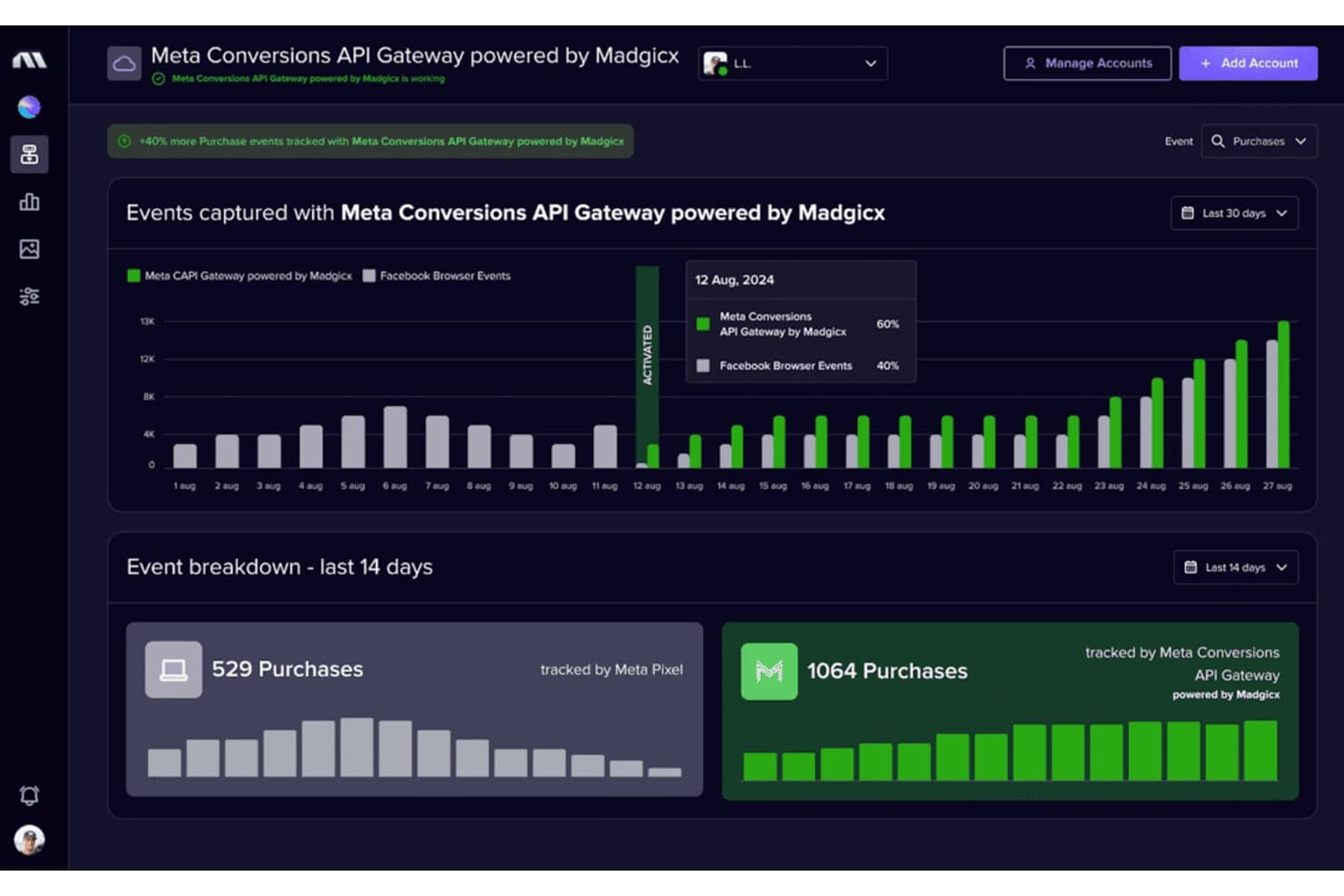
Madgicx tracks 40% more purchases via Meta Conversions API Gateway. My Evaluation Score
- Multi-Network Ad Management
- 1/5
- Creative Testing & Management
- 4/5
- Audience Targeting & Segmentation
- 3/5
- Conversion Tracking & Attribution
- 3/5
- Performance Analytics & Reporting
- 4/5
- Campaign Automation & Optimization
- 5/5
Madgicx is a Meta-focused ad management and automation platform that combines AI-driven campaign optimization, audience building, creative intelligence, and cross-channel reporting.
Who Is Madgicx Best For?
Madgicx is a strong fit for performance marketing agencies and Meta-heavy advertisers spending at least $3,000/month who want to automate campaign optimization at scale.
Why I Picked Madgicx
Madgicx earns its spot on my shortlist because no other tool matches its depth of Meta ad automation. I'm particularly impressed by the Autonomous Budget Optimizer, which redistributes daily budgets across ad sets in real time based on ROAS or CPA targets, and the AI Marketer, which audits your account daily and surfaces prioritized one-click fixes. Pair those with Creative Insights, which uses computer vision to tag and analyze creatives at scale and flag ad fatigue before it costs you, and you've got a genuinely mature Meta automation stack.
Madgicx Key Features
- Audience Studio: A library of prebuilt Meta audiences organized by funnel stage, with tools to build, test, and monitor custom, lookalike, and retargeting segments.
- Ads Manager 2.0: A unified Meta campaign interface with bulk editing, AI bidding, performance trend tracking, and change history built in.
- One-Click Report: A drag-and-drop reporting tool that aggregates data from Meta, Google Ads, TikTok, GA4, Shopify, and Klaviyo into shareable, white-labeled PDFs.
- Madgicx Cloud Tracking: A server-side Meta Conversions API integration that recovers attribution data lost to browser privacy restrictions and iOS changes.
Madgicx Integrations
Madgicx integrates with Meta for campaign management and optimization, plus Google Ads, TikTok Ads, GA4, Shopify, and Klaviyo for reporting. It also supports Meta Conversions API and AI assistants through Madgicx MCP; Google Ads and TikTok Ads are reporting-only.
Pros and Cons
Pros:
- White-label reporting for multiple Meta accounts
- Creative fatigue detection with AI insights
- AI-driven Meta budget and ad optimization
Cons:
- No CRM or BI tool connections
- No ad management outside Meta platforms
Learn more about Madgicx: Best for omnichannel media planning with agentic AI
- Not available
- Pricing upon request
Visit WebsiteCustomer Rating:4.4/5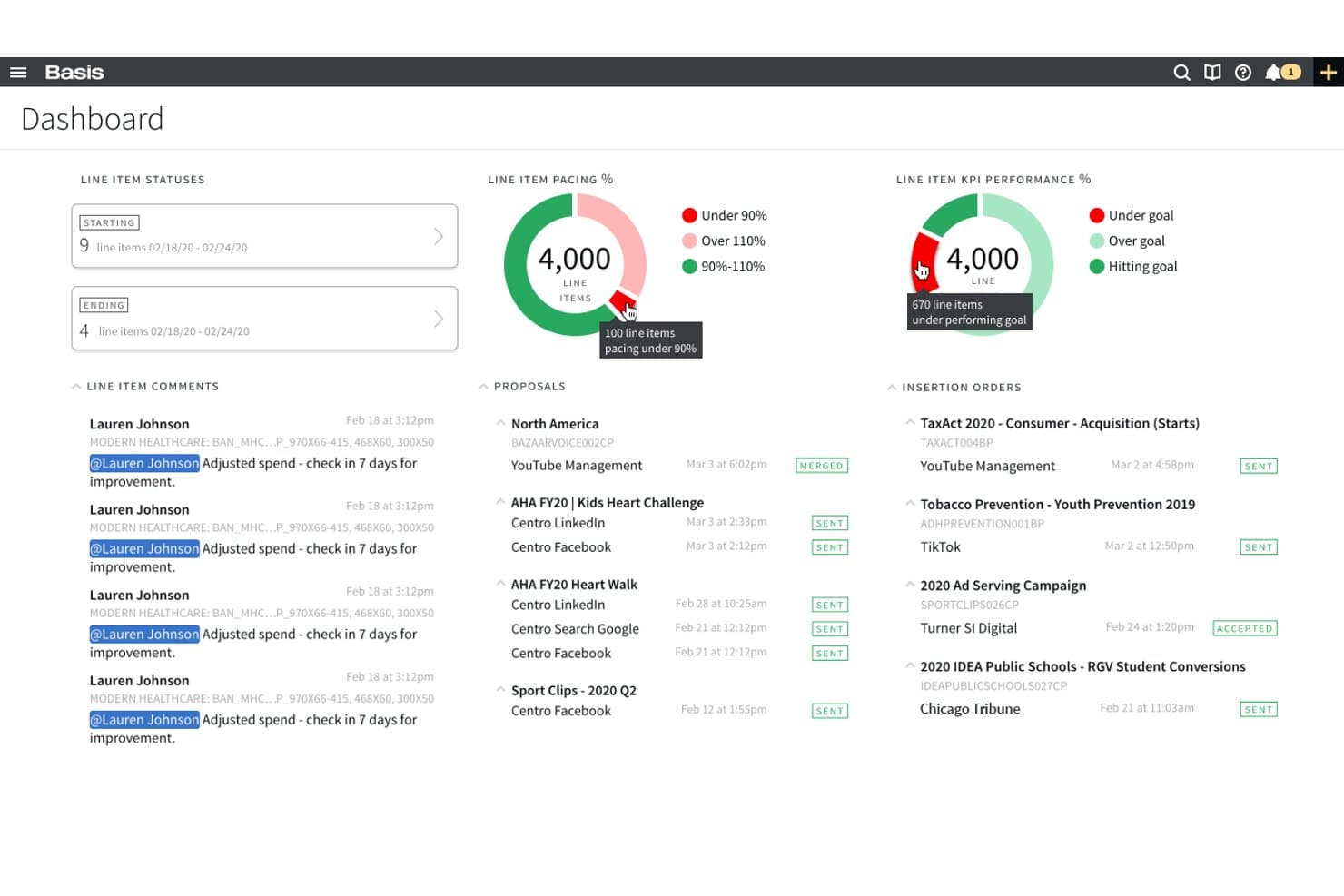
Basis offers a centralized dashboard displaying line item statuses, pacing percentages, KPI performance, proposals, and insertion orders for simplified media buying management. My Evaluation Score
- Multi-Network Ad Management
- 4/5
- Creative Testing & Management
- 2/5
- Audience Targeting & Segmentation
- 5/5
- Conversion Tracking & Attribution
- 3/5
- Performance Analytics & Reporting
- 5/5
- Campaign Automation & Optimization
- 5/5
Basis is an omnichannel advertising platform that unifies programmatic, paid social, search, direct, and CTV campaign management and reporting across a single interface.
Who Is Basis Best For?
Basis is a strong fit for agencies and enterprise teams running omnichannel campaigns across programmatic, CTV, and paid social from a single platform.
Why I Picked Basis
Basis earns its spot on my shortlist because its Compass agentic AI can turn a campaign brief into a fully activation-ready omnichannel media plan in minutes, spanning programmatic, paid social, CTV, and search in one pass. I'm also a fan of how SmartBid continuously reallocates budget across all seven connected social platforms (Meta, LinkedIn, TikTok, Reddit, Snapchat, Pinterest, and YouTube) in real time, so spend naturally shifts toward what's actually performing. The cross-channel dashboards, powered by Snowflake and ThoughtSpot, pull daily data from every connected social network into one view without manual exports.
Basis Key Features
- BasisConnect+ cookieless conversion tracking: Tracks post-click site conversions across connected networks without relying on third-party cookies.
- Basis DataBridge: Pipes cross-channel performance data directly into external BI tools like Looker, Datorama, Tapclicks, and Funnel.
- Private marketplace deal library: Gives you access to 2,000+ curated PMP deals with premium publishers, built directly into the platform.
- LiveRamp CRM audience activation: Converts uploaded CRM records into targetable audience segments, typically available within hours of upload.
Basis Integrations
Basis offers 170+ integrations, including Meta, LinkedIn, TikTok, Reddit, Snapchat, Pinterest, Google Ads, Microsoft Ads, LiveRamp, Looker, and Funnel. It connects with seven social platforms through APIs and supports custom connectivity.
Pros and Cons
Pros:
- Supports privacy-friendly cookieless conversion tracking
- AI-driven media planning and budget optimization
- Enables unified reporting across seven social networks
Cons:
- No native A/B or DCO creative testing
- Social ad creatives managed outside the platform
Learn more about Basis: Best for CRM-driven ad audience targeting
- Free plan available
- From $7/user/month (billed annually)
Visit WebsiteCustomer Rating:4.4/5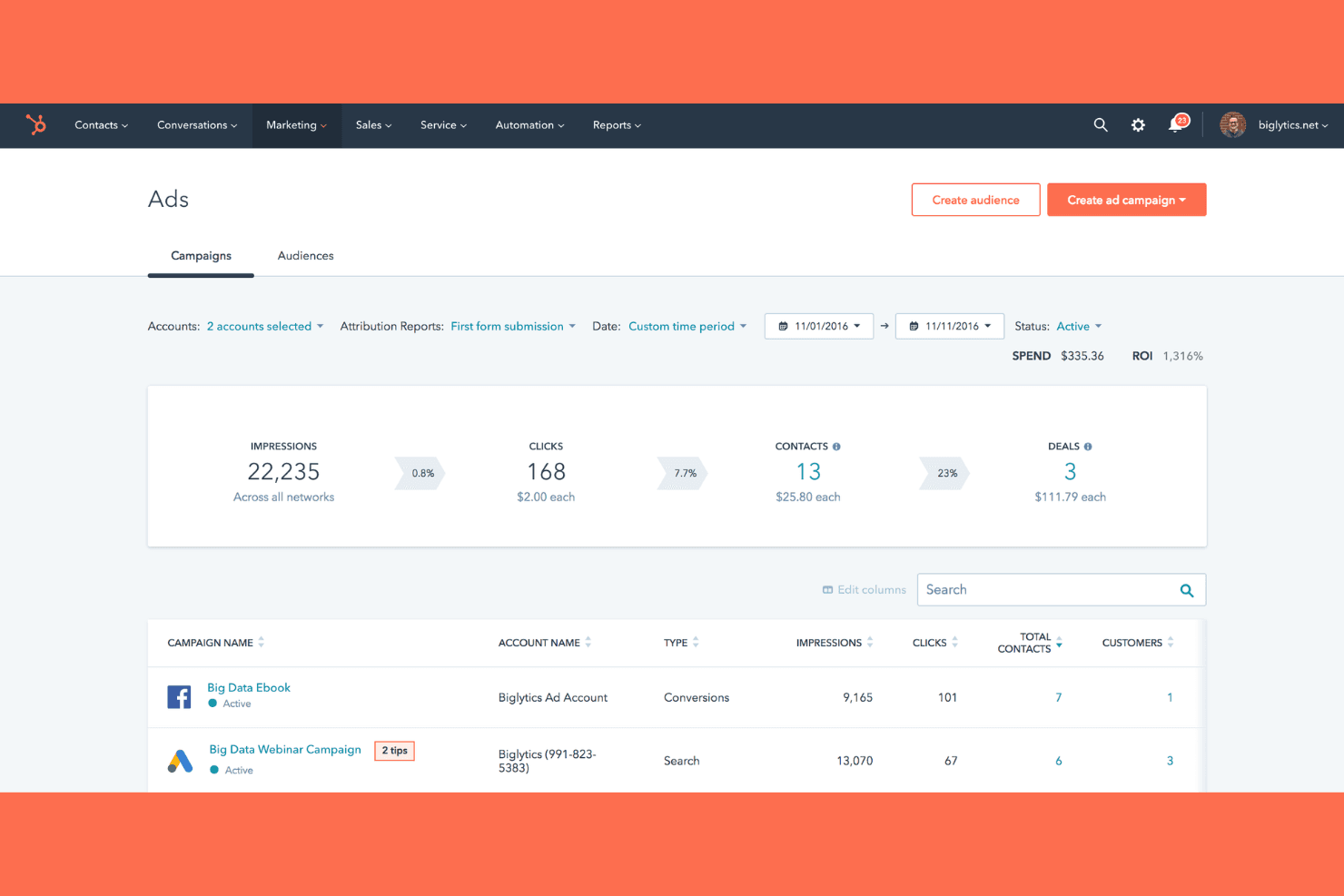
HubSpot Marketing Hub tracks ad spend, ROI, and campaign performance. My Evaluation Score
- Multi-Network Ad Management
- 5/5
- Creative Testing & Management
- 1/5
- Audience Targeting & Segmentation
- 5/5
- Conversion Tracking & Attribution
- 5/5
- Performance Analytics & Reporting
- 4/5
- Campaign Automation & Optimization
- 2/5
HubSpot Marketing Hub is an all-in-one marketing platform that combines paid ad management across Meta, LinkedIn, TikTok, Google, Reddit, and Microsoft with CRM-powered audience targeting, multi-touch attribution, and social media publishing.
Who Is HubSpot Marketing Hub Best For?
HubSpot Marketing Hub is a strong fit for B2B and SaaS marketing teams that want to run paid ads across multiple networks using the same CRM data that drives their sales pipeline.
Why I Picked HubSpot Marketing Hub
HubSpot Marketing Hub earns its spot on my shortlist because no other tool in this category lets you build ad audiences directly from CRM data the way it does. I can target Meta, LinkedIn, and TikTok campaigns using lifecycle stage, deal history, or purchase behaviour pulled straight from the CRM, then track each interaction back to closed-won revenue through multi-touch attribution. That closed loop, from ad click to signed contract, is what makes it genuinely useful for B2B and SaaS demand generation teams.
HubSpot Marketing Hub Key Features
- Ad sequence builder: Automatically triggers follow-up workflows—like email nurture or sales routing—after a contact interacts with an ad.
- LinkedIn Lead Gen Forms: Captures lead data from native LinkedIn forms and syncs it directly to HubSpot CRM contacts.
- Pixel management: Deploys and manages TikTok and Meta tracking pixels from within HubSpot to sync conversion data back to CRM records.
- Customizable attribution dashboards: Connects ad interactions to pipeline and closed-won revenue using time decay, U-shaped, and W-shaped attribution models.
HubSpot Marketing Hub Integrations
HubSpot Marketing Hub offers native integrations with Meta, LinkedIn, Google Ads, TikTok, Microsoft Ads, Reddit Ads, Salesforce, and Google Analytics 4. Its App Marketplace adds 2,000+ marketplace integrations, and an API supports custom connections.
Pros and Cons
Pros:
- Multi-touch attribution links ads to revenue
- Multi-network campaigns managed in one place
- CRM-powered audience targeting for paid ads
Cons:
- No AI-driven bid or budget optimization
- No native ad A/B testing feature
Learn more about HubSpot Marketing Hub:
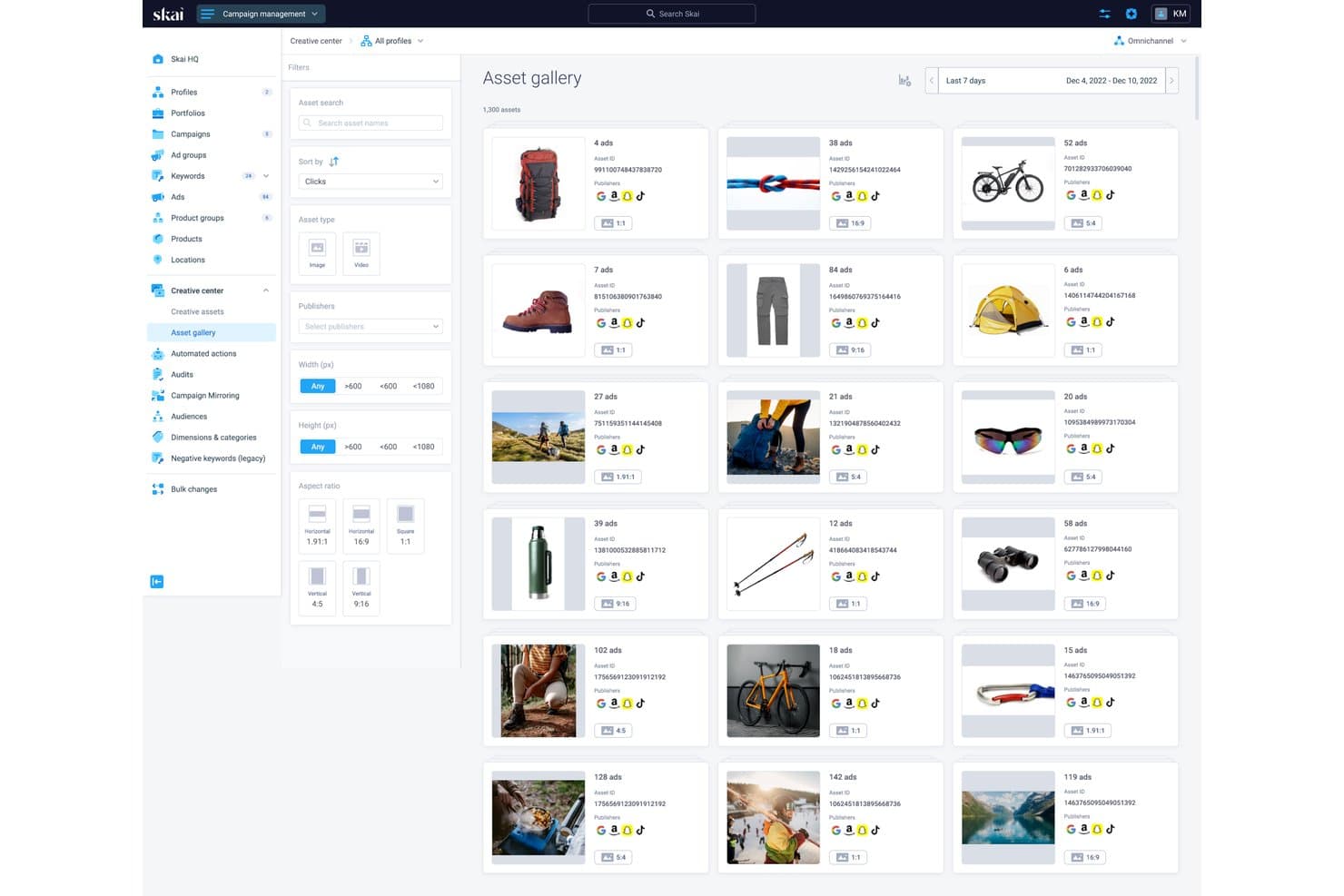
Skai's asset gallery centralizes creative assets across publishers. My Evaluation Score
- Multi-Network Ad Management
- 5/5
- Creative Testing & Management
- 4/5
- Audience Targeting & Segmentation
- 5/5
- Conversion Tracking & Attribution
- 5/5
- Performance Analytics & Reporting
- 5/5
- Campaign Automation & Optimization
- 5/5
Skai is an enterprise paid media platform that unifies campaign management, AI-driven optimization, and cross-channel reporting across social, search, and retail media networks from a single interface.
Who Is Skai Best For?
Skai is a strong fit for enterprise performance marketing teams running paid campaigns across social, search, and retail media simultaneously.
Why I Picked Skai
I've included Skai in my top picks because it's the strongest option I've found for running paid campaigns across social, search, and retail media from a single platform without losing performance visibility. Its Budget Navigator and algorithmic optimization engine automatically shift spend across channels based on live ROAS signals, which means less manual reallocation when performance shifts mid-flight. Celeste AI adds conversational reporting on top of that, so you can query cross-channel performance in plain language and get actionable insights in under a minute.
Skai Key Features
- Build Your Own Algorithm: A custom algorithm builder that lets you train optimization logic against your own business goals, beyond standard bid strategies.
- Celeste AI conversational queries: A natural-language interface that lets you ask performance questions and get cross-channel insights returned in under a minute.
- Third-party audience marketplace: Access to 1,000+ behavioural audience segments from Experian, Oracle, and Epsilon for targeting on Meta's family of apps.
- Competitive Insights: A benchmarking tool available on Advanced and higher tiers for monitoring and analyzing competitor landscape data across channels.
Skai Integrations
Skai connects with 300+ publishers, including Meta, TikTok, Snapchat, Pinterest, LinkedIn, Google, and Amazon Ads, plus Salesforce, Google Analytics, Adobe Analytics, AppsFlyer, and Adjust. It also supports custom integrations through its open framework, Amazon S3, BigQuery, and Zapier.
Pros and Cons
Pros:
- True omnichannel reporting for social, retail, and search
- Conversational AI delivers instant performance insights
- Cross-channel budget reallocation with live ROAS signals
Cons:
- Full Reddit Ads support still rolling out
- Annual contracts with high minimum spend required
Learn more about Skai:
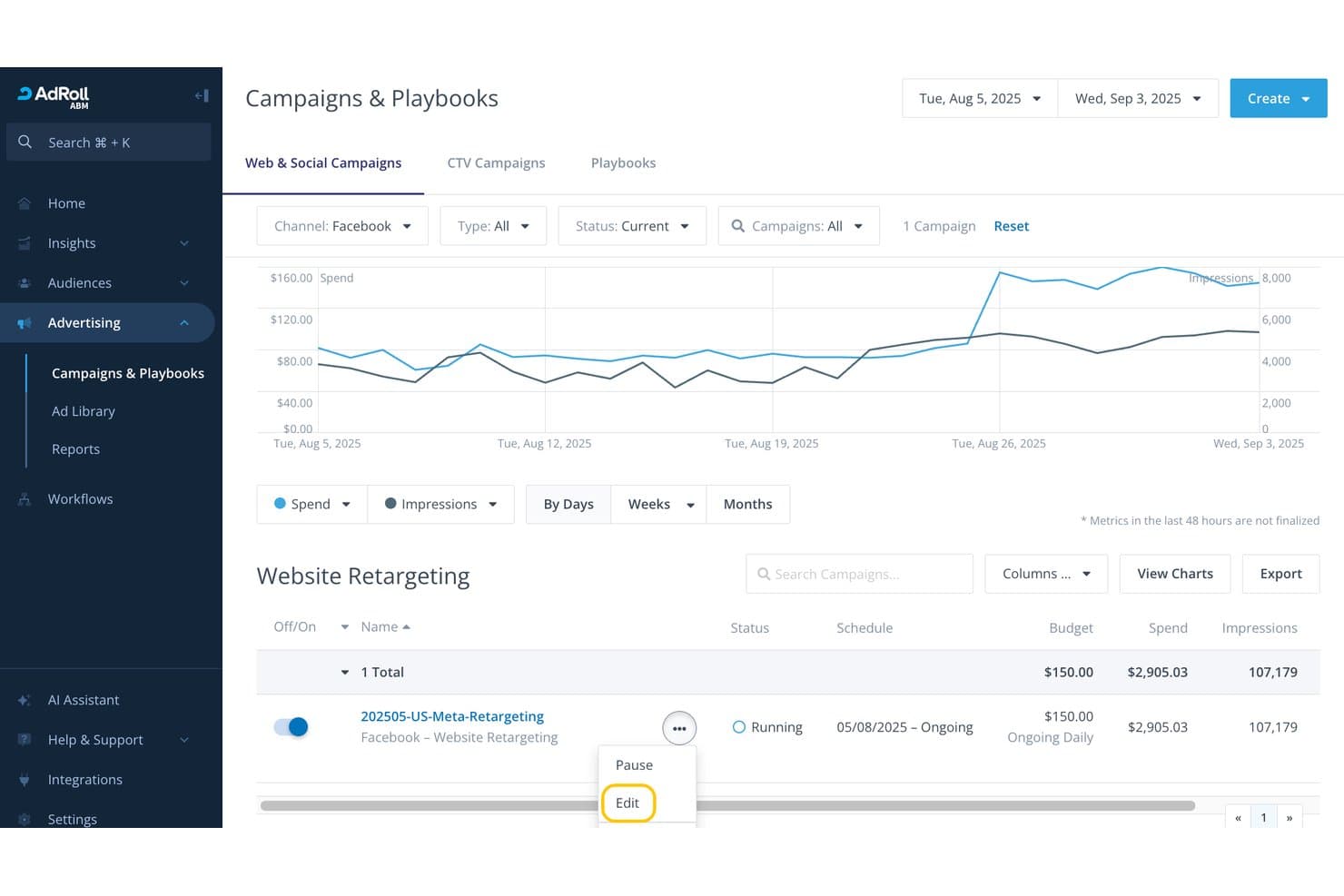
RollWorks lets users edit and manage Facebook retargeting campaigns easily. My Evaluation Score
- Multi-Network Ad Management
- 4/5
- Creative Testing & Management
- 3/5
- Audience Targeting & Segmentation
- 5/5
- Conversion Tracking & Attribution
- 5/5
- Performance Analytics & Reporting
- 4/5
- Campaign Automation & Optimization
- 5/5
RollWorks is a B2B-focused advertising platform that combines account-based audience targeting, AI-driven bid optimization, and cross-channel campaign management across LinkedIn, Meta, TikTok, and Pinterest.
Who Is RollWorks Best For?
RollWorks is built for B2B SaaS demand generation and growth marketing teams that need account-level ad targeting tied directly to pipeline and revenue reporting.
Why I Picked RollWorks
I picked RollWorks as one of the best because its ICP Fit Scoring and BidIQ AI engine make B2B account-based ad targeting genuinely precise. Rather than broad audience sprays, I can build dynamic account lists graded by firmographic and intent data from Bombora and G2, then let BidIQ optimize bids across LinkedIn and Meta using 80+ signals per impression. The Revenue Impact Report then ties those campaigns directly to pipeline and closed-won revenue, not just clicks.
RollWorks Key Features
- ICP Fit Scoring: Grades target accounts A–D based on firmographic, technographic, and intent data to prioritize ad spend on your best-fit accounts.
- LinkedIn Lead Gen Forms: Supports native LinkedIn Lead Gen Forms, Carousel, Conversation, and Event ad formats directly within the platform.
- Journey Prediction: Uses CRM and intent data to flag accounts 4X–25X more likely to convert, triggering automated marketing-to-sales handoffs.
- Revenue Impact Report: Compares ad-influenced vs. non-influenced deals across pipeline, deal size, sales cycle length, and win rate.
RollWorks Integrations
RollWorks offers native integrations with Salesforce, HubSpot, LinkedIn Marketing Solutions, Facebook, Instagram, TikTok, Pinterest, Bombora, G2, and Google Analytics. Its Reporting API supports custom data connections.
Pros and Cons
Pros:
- Automated bid optimization with AI engine
- Revenue reporting ties campaigns to pipeline
- Best-in-class B2B audience targeting tools
Cons:
- No generative AI or native A/B testing
- Social ads limited to four networks
Learn more about RollWorks: Best for AI-driven budget reallocation at scale
- Free demo available
- Pricing upon request
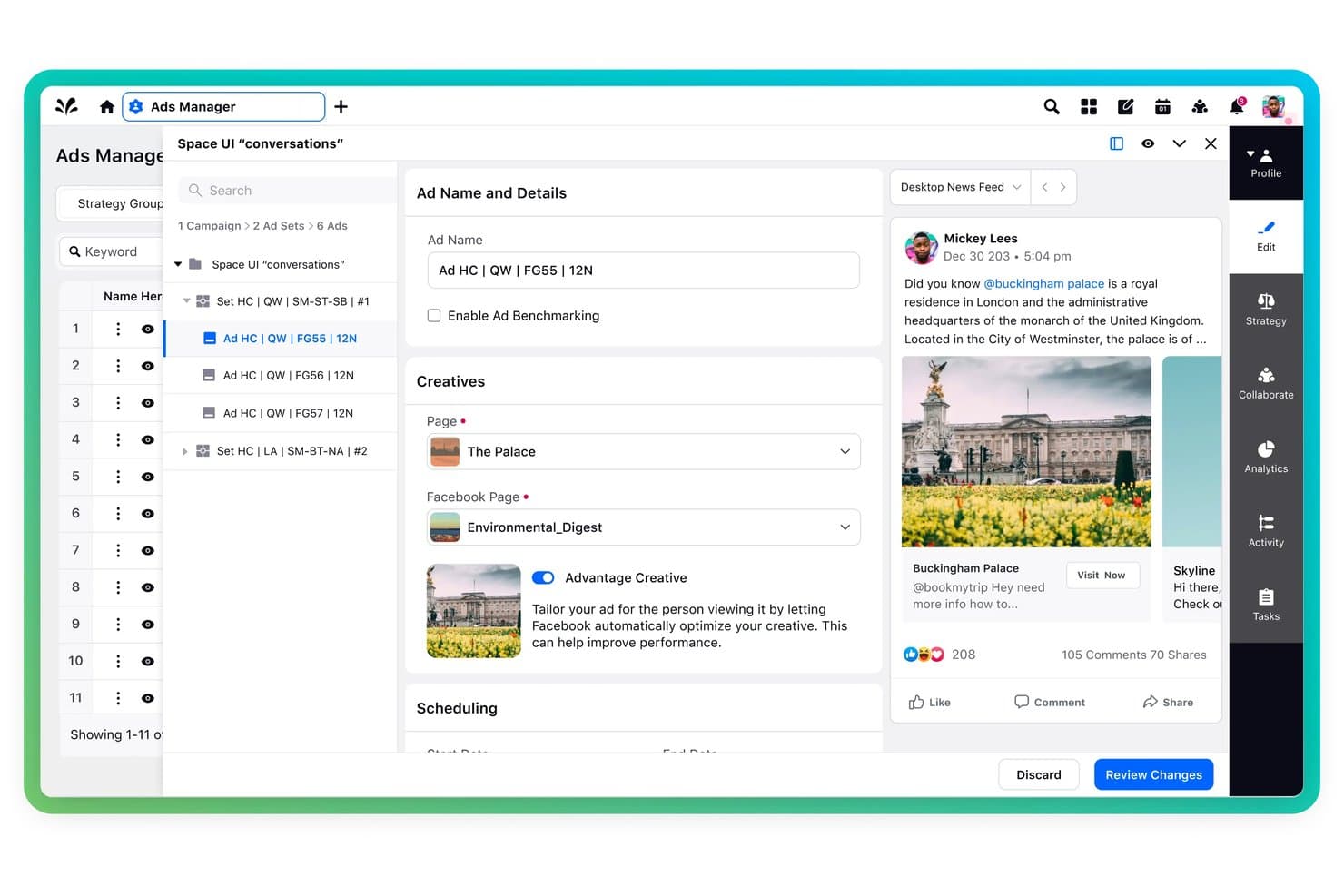
Sprinklr Marketing lets users build and preview social ads with creative controls. My Evaluation Score
- Multi-Network Ad Management
- 5/5
- Creative Testing & Management
- 5/5
- Audience Targeting & Segmentation
- 5/5
- Conversion Tracking & Attribution
- 4/5
- Performance Analytics & Reporting
- 5/5
- Campaign Automation & Optimization
- 5/5
Sprinklr Marketing is an enterprise social media advertising platform that manages paid campaigns across 10+ ad networks—including Meta, LinkedIn, TikTok, Reddit, and Snapchat—with AI-driven budget allocation, creative optimization, and unified cross-channel reporting.
Who Is Sprinklr Marketing Best For?
Sprinklr Marketing is built for enterprise paid social teams managing high-volume campaigns across 10+ networks who need AI-driven budget decisions, not manual channel-by-channel adjustments.
Why I Picked Sprinklr Marketing
I picked Sprinklr Marketing as one of the best because its Smart Budget Allocation does something I rarely see done well: it automatically shifts spend across 10+ ad networks in real time based on live performance signals. If LinkedIn is underperforming against Meta on a given day, the AI rebalances without manual intervention. The Anomaly Copilot layer catches spend deviations before they compound, which makes it genuinely useful at enterprise scale.
Sprinklr Marketing Key Features
- Dynamic Creative Optimization: Automatically tests and selects winning combinations of ad elements across creatives to improve ad performance.
- Approval workflows: Built-in, tiered review and approval flows with role-based access controls and email-based approvals for enterprise ad governance.
- AI Creative Insights: Analyzes ad content elements—including CTA placement, colour, and logo position—to surface high-performing creative patterns.
- Unified cross-channel reporting: Combines paid, organic, and earned media data into a single customizable dashboard with BI tool integrations.
Sprinklr Marketing Integrations
Sprinklr Marketing offers 100+ integrations, including Salesforce, Adobe Marketo Engage, Google Analytics 4, Adobe Analytics, Tableau, Power BI, AppsFlyer, and Adobe Firefly. Native ad-network integrations include Meta, LinkedIn, TikTok, Reddit, Pinterest, and Amazon Ads.
Pros and Cons
Pros:
- Paid, organic, and earned data in one dashboard
- Deep campaign approval and governance controls
- AI shifts budget across 10+ networks automatically
Cons:
- Platform can feel overwhelming for smaller teams
- Requires annual enterprise contract to purchase
Learn more about Sprinklr Marketing: Best for retargeting across Meta, TikTok, and Pinterest
- Not available
- Pricing upon request
Visit WebsiteCustomer Rating:3.9/5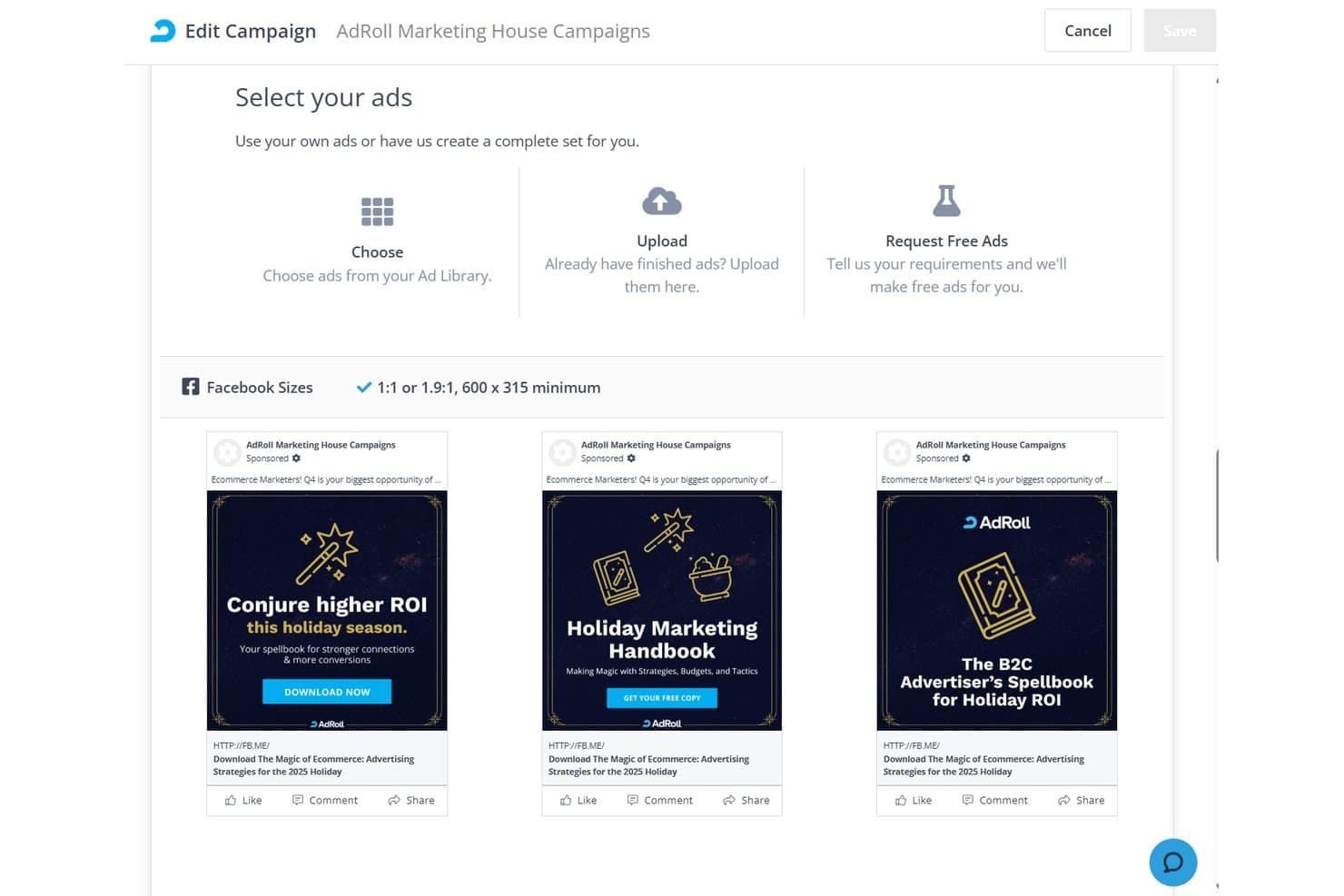
AdRoll lets users select and preview Facebook ads within a campaign. My Evaluation Score
- Multi-Network Ad Management
- 3/5
- Creative Testing & Management
- 2/5
- Audience Targeting & Segmentation
- 5/5
- Conversion Tracking & Attribution
- 5/5
- Performance Analytics & Reporting
- 4/5
- Campaign Automation & Optimization
- 5/5
AdRoll is a multi-channel digital advertising platform that manages retargeting, prospecting, and full-funnel ad campaigns across social networks, display, native, video, and CTV from a single dashboard.
Who Is AdRoll Best For?
AdRoll suits ecommerce brands and performance marketers who want to manage retargeting campaigns across Meta, TikTok, and Pinterest from a single platform.
Why I Picked AdRoll
AdRoll earns its spot on my shortlist because it's one of the few platforms that lets you run and manage retargeting campaigns across Meta, TikTok, and Pinterest from a single dashboard without juggling three native ad managers. I'm particularly impressed by its Dynamic CPM bidding, which uses over 17 years of ML training data to automatically adjust bids based on real performance signals across all three networks simultaneously. The Recipes automation feature is also genuinely useful, letting you coordinate cross-channel social campaigns in one workflow rather than rebuilding logic in each platform separately.
AdRoll Key Features
- Cross-Channel Attribution add-on: Tracks conversions across channels using pixel, UTM, and API integrations, then visualizes the full funnel in Pathways reports with assisted conversion analysis.
- AI lookalike targeting: Builds new audiences by analyzing existing customer data with machine learning to find users most likely to convert across supported networks.
- Centralized Ad Library: Stores and organizes all creative assets in one place, letting you swap images, video, and HTML5 ads across campaigns without re-uploading.
- Peer benchmarking: Compares your CTR, CPC, and CPM performance against industry averages so you can gauge where campaigns stand relative to similar advertisers.
AdRoll Integrations
AdRoll offers 70+ integrations, including Salesforce, HubSpot, Google Analytics, Shopify, WooCommerce, Meta, TikTok, and Pinterest. It also provides 8+ public APIs for custom integrations and reporting.
Pros and Cons
Pros:
- Peer benchmarking for social ad campaign metrics
- Full-funnel retargeting with 17+ years ML data
- AI-driven dynamic bidding optimization across channels
Cons:
- No native A/B or multivariate ad testing
- Lacks LinkedIn and X campaign management
Learn more about AdRoll: Best for AI across Facebook and Instagram
- Free plan available
- From $1/day
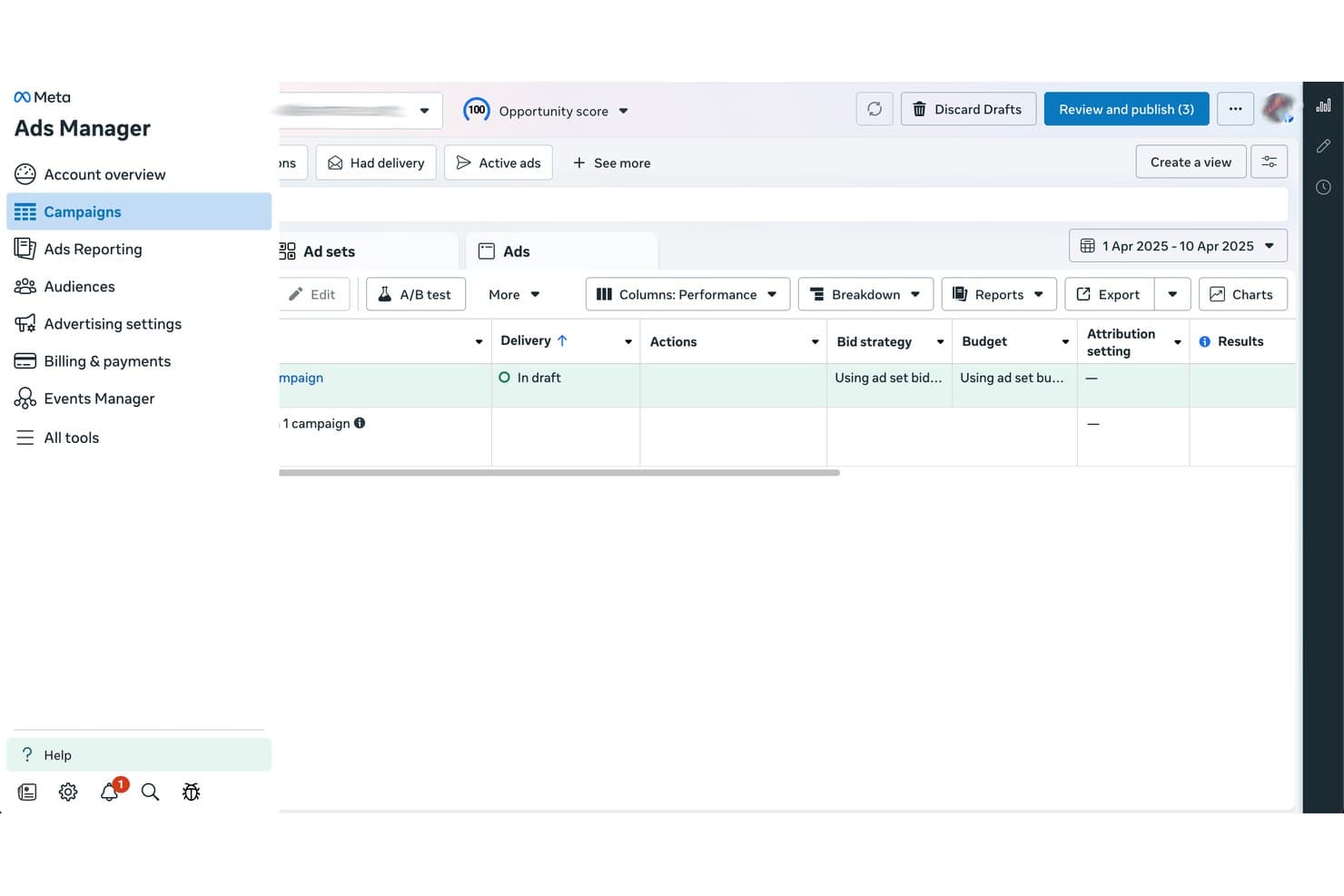
Meta Ads Manager lets users review and publish draft campaigns. My Evaluation Score
- Multi-Network Ad Management
- 1/5
- Creative Testing & Management
- 5/5
- Audience Targeting & Segmentation
- 5/5
- Conversion Tracking & Attribution
- 5/5
- Performance Analytics & Reporting
- 3/5
- Campaign Automation & Optimization
- 5/5
Meta Ads Manager is Meta's native ad management platform for creating, running, and optimizing paid campaigns across Facebook, Instagram, Messenger, WhatsApp, and the Meta Audience Network, with AI-driven automation, audience targeting, creative testing, and conversion tracking built in.
Who Is Meta Ads Manager Best For?
Meta Ads Manager is the go-to tool for performance marketers and paid social specialists who run campaigns primarily on Facebook and Instagram and want deep AI-driven automation through the Advantage+ suite.
Why I Picked Meta Ads Manager
Meta Ads Manager earns its spot on my shortlist because no other platform comes close to what Advantage+ AI delivers across Facebook and Instagram at scale. I'm particularly impressed by Advantage+ Audience, which uses Meta's AI to discover high-converting audiences beyond your manual inputs, and Advantage+ Creative, which auto-generates and tests multiple ad variants using your brand assets. On top of that, Incremental Attribution uses holdout testing to measure true ad-driven conversions, not just last-click credit.
Meta Ads Manager Key Features
- Advantage+ Campaign Budget: Meta's AI automatically allocates your total campaign budget across ad sets in real time to maximize results.
- Conversions API (CAPI): Server-side tracking sends conversion data directly from your server to Meta, bypassing browser restrictions and iOS privacy limits.
- Automated rules: Rule-based triggers that pause, activate, or adjust bids and budgets when campaigns hit defined performance thresholds.
- Instant Forms: Native lead capture forms that collect contact info within Facebook and Instagram without redirecting users to an external landing page.
Meta Ads Manager Integrations
Meta Ads Manager integrates with HubSpot, Salesforce, Shopify, Google Analytics 4, Google Looker Studio, and Zapier. It also supports the Conversions API for custom CRM, server-side tracking, and data integrations.
Pros and Cons
Pros:
- Incremental attribution measures true ad-driven lift
- Deep audience targeting with Advantage+ features
- Industry-leading AI automation for ad campaigns
Cons:
- Account suspensions and bans happen with little warning
- Only supports Meta-owned social platforms
Learn more about Meta Ads Manager: Best for B2B pipeline-driven ad optimization
- Free demo available
- Pricing upon request
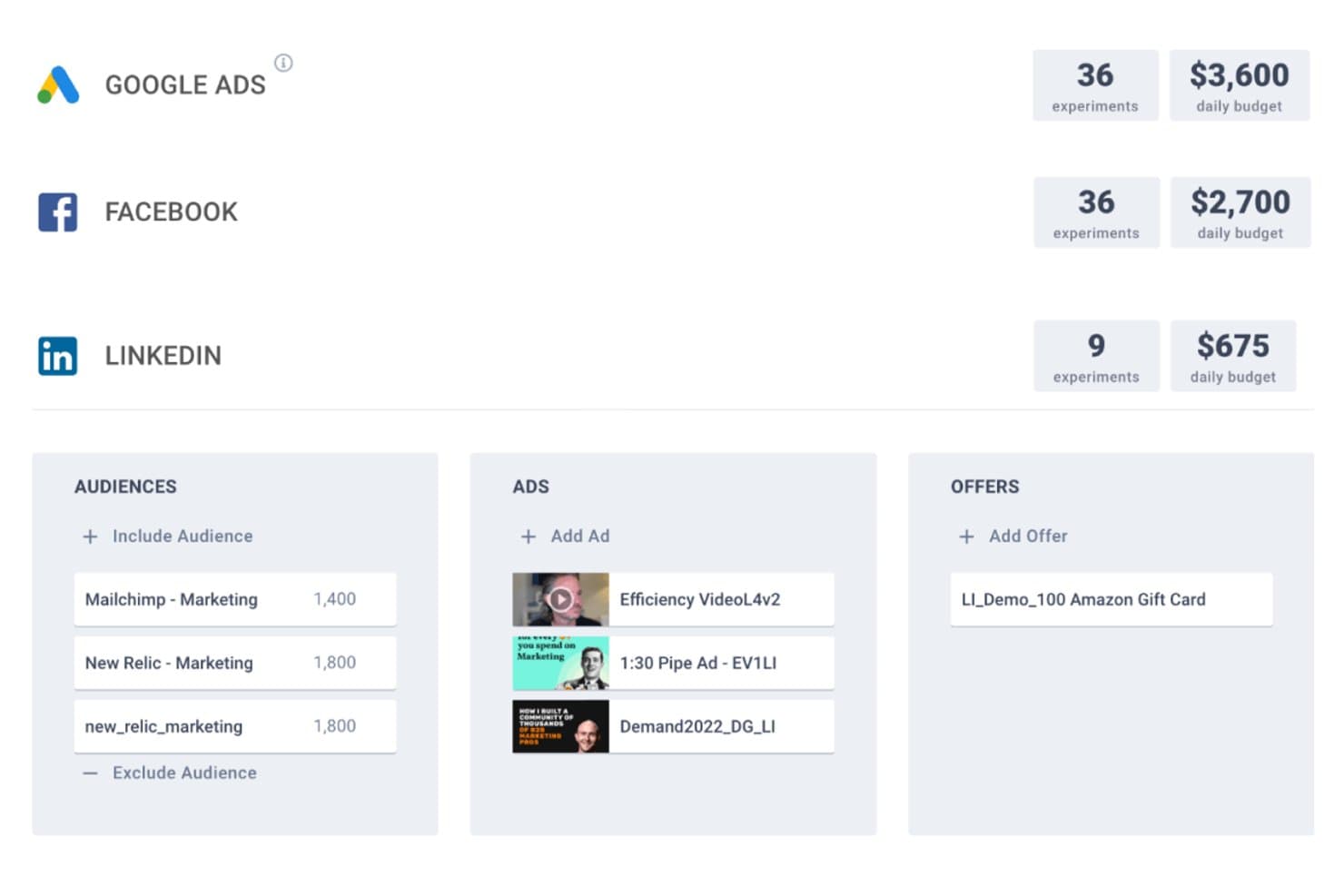
Metadata manages ad experiments across Google, Facebook, and LinkedIn from one place. My Evaluation Score
- Multi-Network Ad Management
- 5/5
- Creative Testing & Management
- 5/5
- Audience Targeting & Segmentation
- 5/5
- Conversion Tracking & Attribution
- 5/5
- Performance Analytics & Reporting
- 4/5
- Campaign Automation & Optimization
- 5/5
Metadata is a B2B-focused paid social advertising platform that manages campaigns across LinkedIn, Meta, X, Reddit, Google, Bing, and ChatGPT, with AI-driven audience targeting, automated multivariate experimentation, and closed-loop revenue attribution built in.
Who Is Metadata Best For?
Metadata is built for B2B SaaS demand generation teams at mid-market and enterprise companies that run high-volume paid campaigns and need to tie ad spend directly to pipeline.
Why I Picked Metadata
I picked Metadata as one of the best because it's the only platform I've seen that optimizes paid social spend directly to pipeline, not just clicks or leads. Its Bid Agent negotiates bids up to 50 times per day across LinkedIn, Meta, and Google, while the Optimization Agent runs multivariate experiments across audiences, creatives, and offers simultaneously. What seals it for me is the MetaMatch identity graph, which maps 500M+ B2B profiles onto consumer platforms like Meta, so you're reaching the right accounts even off LinkedIn.
Metadata Key Features
- MetaMatch identity graph: Maps 500M+ B2B profiles from 15+ data sources onto consumer ad platforms so you can target business buyers on Meta and Reddit, not just LinkedIn.
- Seven specialized AI agents: Dedicated agents handle each campaign stage—from audience building and creative generation to bid management, analytics, and operations.
- Website visitor deanonymization: Identifies anonymous site visitors at the contact level in real time, before any form fill, and syncs that data back to Salesforce.
- MetadataONE MCP server: Exposes 160 tools via an open Model Context Protocol server, letting any compatible LLM generate fully configured campaigns from a single natural language prompt.
Metadata Integrations
Metadata integrates with Salesforce, HubSpot, Marketo, LinkedIn Ads, Meta, Google Ads, Microsoft Advertising, Bombora, G2, and Google Analytics 4. It also offers an open API, a 160-tool MetadataONE MCP server, and Zapier.
Pros and Cons
Pros:
- B2B identity graph unlocks new targeting options
- Ties ad spend directly to pipeline revenue
- Automates multivariate ad experiments across networks
Cons:
- Limited support for newer creative ad formats
- Only suited for high-volume B2B advertisers
Learn more about Metadata: Best for AI-driven creative and media unification
- Free demo available
- Pricing upon request
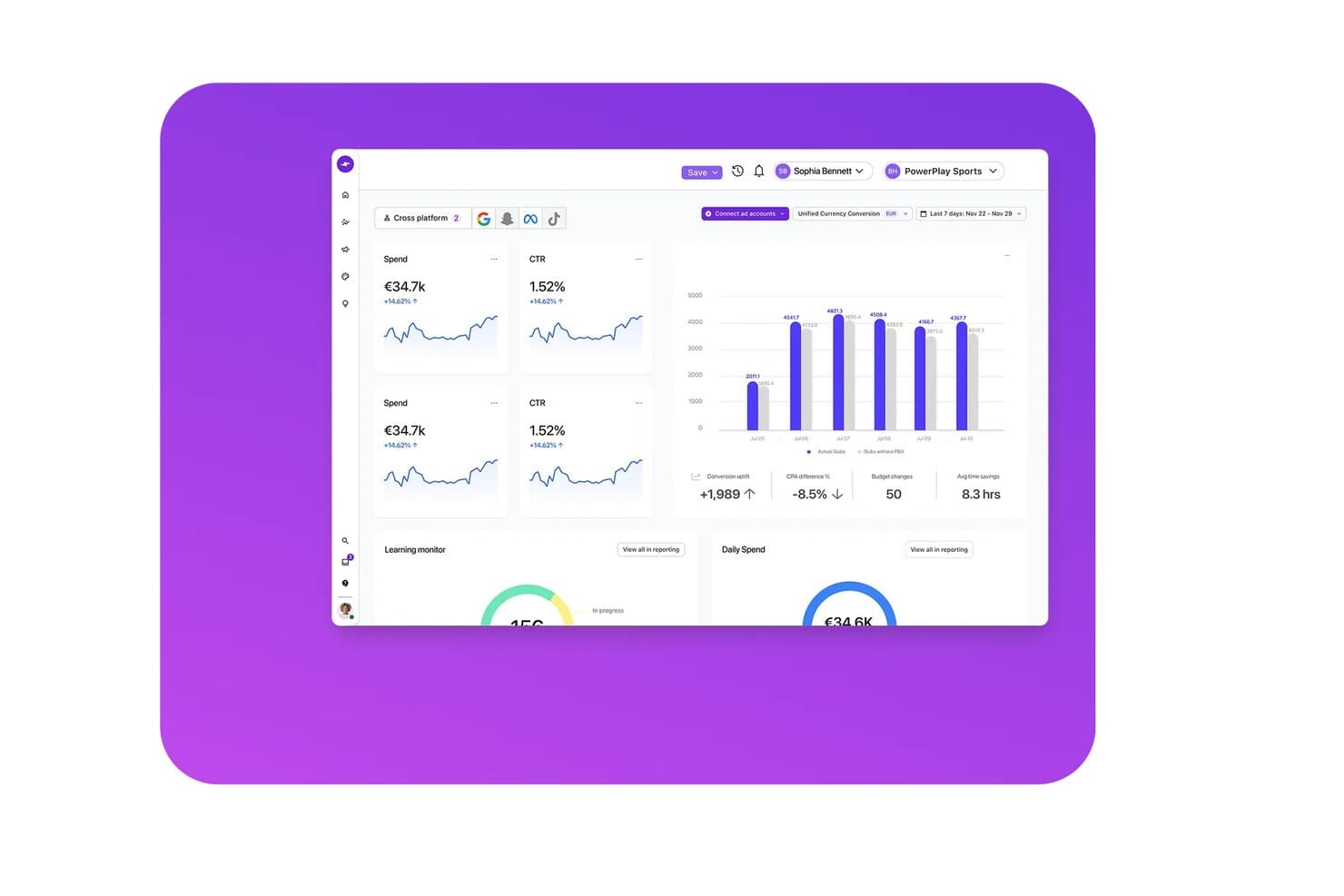
Smartly.io unifies cross-platform ad performance in one dashboard. My Evaluation Score
- Multi-Network Ad Management
- 5/5
- Creative Testing & Management
- 5/5
- Audience Targeting & Segmentation
- 4/5
- Conversion Tracking & Attribution
- 3/5
- Performance Analytics & Reporting
- 4/5
- Campaign Automation & Optimization
- 5/5
Smartly.io is a social media advertising platform that unifies AI-driven creative production, multi-network campaign management, and performance analytics across Meta, TikTok, Pinterest, Snapchat, Reddit, and other major ad networks.
Who Is Smartly.io Best For?
Smartly.io fits enterprise brands and agencies running high-volume paid social campaigns across multiple networks, particularly in e-commerce, retail, and consumer verticals.
Why I Picked Smartly.io
Smartly.io earns its spot on my shortlist because it's one of the only platforms that genuinely unifies creative production and media execution in a single workflow. I love that AI Studio can generate 50+ on-brand creative variants from one template in under 10 minutes, adapting copy, visuals, and formats across Meta, TikTok, Pinterest, and more without rebuilding from scratch. Paired with Creative Predictive Potential, I can see projected attention scores before a campaign ever goes live.
Smartly.io Key Features
- Predictive Budget Allocation: AI-driven feature that shifts spend in real time toward the highest-performing channels and campaigns across your entire portfolio.
- Optimization Triggers: Rules-based automation that pauses underperforming ads, scales budgets for top performers, and rotates creatives to prevent fatigue.
- Brand Pulse: Cross-channel reach and frequency measurement tool that deduplicates audience exposure in real time for upper-funnel brand campaigns.
- Dynamic Product Ads: AI-enhanced video and image templates that automate and scale catalogue-based ad campaigns across Meta, TikTok, Snapchat, and Pinterest.
Smartly.io Integrations
Smartly.io supports 10+ native ad network integrations, including Meta, TikTok, Google Ads, Pinterest, Snapchat, Reddit, Spotify, Roku, The Trade Desk, and Yahoo DSP. It also connects with Salesforce, HubSpot, Adobe After Effects, Adobe Photoshop, Figma, and Google Web Designer.
Pros and Cons
Pros:
- Supports real-time cross-channel budget allocation
- AI predicts creative performance pre-launch
- Unifies creative production and media management
Cons:
- Enterprise pricing excludes smaller advertisers
- No LinkedIn ad management included
Learn more about Smartly.io:
Other Social Media Advertising Software
Here are some additional social media advertising software options that didn’t make it onto my shortlist, but are still worth checking out:
- 11LinkedIn Marketing SolutionsBest for B2B ads on professional attributes
- 12MediaoceanBest for omnichannel ad campaign orchestration
- 13HootsuiteBest for unified organic and paid ad management
- 14AdEspressoBest for Meta A/B testing across agencies
- 15BrandwatchBest for AI-powered social listening insights
- 16OptmyzrBest for rule-based automation across Meta and LinkedIn
How I Evaluate Social Media Advertising Software
I split my evaluation into two layers: the core capabilities a tool must have—like running Meta and LinkedIn campaigns from one place—and the differentiators that separate good from great.
Core Functionality (Table Stakes For This List)
When I'm selecting tools for my list, I rank each one on a scale from 0 (does not offer the functionality) to 5 (excels in this area) for each core functionality listed below. Then, I calculate the tool's total score into a percentage. Each tool needs to achieve a minimum total score of 75% to be considered for inclusion.
- Multi-Network Ad Management: I check whether you can build and manage campaigns across Meta, LinkedIn, TikTok, and other major networks from a single dashboard.
- Audience Targeting & Segmentation: Custom audiences, lookalikes, and retargeting lists should be manageable across networks—like syncing a CRM list to both Meta and LinkedIn.
- Campaign Automation & Optimization: I evaluate whether the platform offers rules-based or AI-driven automation for bids and budgets, such as auto-pausing underperforming ad sets.
- Creative Testing & Management: The tool should let you run A/B or multivariate tests on ad variants and organize assets in a shared creative library.
- Performance Analytics & Reporting: Cross-network dashboards that aggregate KPIs like CPC, CPA, and ROAS matter here, along with scheduled or exportable reports.
- Conversion Tracking & Attribution: I look for pixel and server-side tracking support tied to downstream outcomes, like connecting ad clicks to demo requests in your CRM.
Once I have a list of tools that meet this criteria, I consider what sets each platform apart.
Differentiating Factors (What Sets Vendors Apart)
Here's how I compare and contrast different vendors:
Standout Features
Cross-channel budget reallocation is a big differentiator—I look for platforms that can automatically shift spend toward the best-performing network mid-campaign. Competitor ad intelligence adds real value too, especially when you need to benchmark creative strategies against other SaaS brands in your vertical. Approval workflows matter for teams where campaigns pass through multiple stakeholders before launch, cutting down on messy email threads and version confusion.
Beyond Features
I evaluate how well each platform connects to the broader SaaS tech stack—specifically CRM and marketing automation tools like Salesforce and HubSpot—because closed-loop reporting from ad click to closed deal is essential for proving ROI. Pricing structure matters too; I check whether costs scale predictably as ad budgets grow or if surprise fees kick in. Data security rounds out my evaluation, where I look for SOC 2 compliance, role-based access controls, and first-party data handling that keeps pace with evolving privacy requirements.
How to Choose Social Media Advertising Software
It’s easy to get bogged down in long feature lists and complex pricing structures. To help you stay focused as you work through your unique software selection process, here’s a checklist of factors to keep in mind:
| Factor | What to Consider |
|---|---|
| FactorScalability | What to ConsiderDoes the platform accommodate growth in ad volume, channels, and users as your business expands? |
| FactorIntegrations | What to ConsiderWhich marketing, analytics, or e-commerce tools does it connect with natively to avoid manual work? |
| FactorCustomizability | What to ConsiderCan you tailor campaign workflows, dashboard views, and reporting to your organization’s structure? |
| FactorEase of use | What to ConsiderIs it straightforward for new team members to learn? Can non-technical users confidently run campaigns? |
| FactorImplementation and onboarding | What to ConsiderHow quickly can you launch campaigns post-purchase? Are there onboarding resources or migration support? |
| FactorCost | What to ConsiderHow do subscription fees sync with your campaign budgets or agency pricing? Are there hidden add-on costs? |
| FactorSecurity safeguards | What to ConsiderDoes the software offer multi-user controls, role-based permissions, and data privacy compliance? |
| FactorSupport availability | What to ConsiderIs live support available in your time zone or language, and what channels can you reach them through? |
What Are Social Media Advertising Software?
Social media advertising software are platforms that help you plan, launch, and analyze paid campaigns across social networks from a single dashboard. These tools let you schedule ads, manage budgets, target specific audiences, and measure returns in one place. By centralizing ad management, reporting, and optimization, these platforms help businesses maximize reach, save time, and refine strategy without switching between individual social channels.
Features of Social Media Advertising Software
When selecting social media advertising software, keep an eye out for the following key features:
- Campaign scheduling: Set up ad campaigns in advance to automatically launch and stop at specific dates or times, ensuring consistent promotion and timely content delivery across platforms.
- Audience targeting: Select and refine the demographics, interests, and behaviors of who will see your ads, allowing for precise messaging and better ad performance.
- Multi-channel management: Control and monitor ad campaigns across several social networks from a single dashboard, eliminating the need to log in to individual platforms.
- Budget control: Set spending limits, allocate budgets to different campaigns, and monitor ad spend in real time to avoid overspending and optimize resource allocation.
- Creative asset management: Store, organize, and reuse images, videos, and copy for easy creation of new ads and smooth collaboration with creative teams.
- Performance analytics: Access detailed reports that highlight campaign reach, conversions, costs, and engagement so you can track results and make better decisions.
- Automated reporting: Generate and schedule regular performance reports delivered to your inbox or stakeholders, saving manual tracking time and keeping everyone aligned.
- Team collaboration tools: Assign tasks, add comments, and manage user permissions within the platform, making it easier to coordinate campaigns among team members.
- A/B testing for ads: Run multiple variations of ads to determine which performs best, using data to continuously refine creative and targeting strategies.
- Approval workflows: Set up step-by-step approval processes for ad creative, messaging, or budgets, ensuring campaigns meet quality standards and compliance before going live.
Common Social Media Advertising Software AI Features
Beyond the standard social media advertising software features listed above, many of these solutions are incorporating AI with features like:
- Automated ad creative generation: Uses AI to produce text, image, or video ad variants tailored to your objectives and target audience, accelerating creative testing and ad personalization at scale.
- Predictive performance modeling: Analyzes historical data and current trends to forecast which campaigns, creatives, or targeting settings are most likely to meet your goals before you spend budget.
- Smart audience segmentation: Identifies new audience segments, lookalikes, or high-propensity groups using machine learning, helping you discover potential customers or refine who sees your ads.
- Real-time anomaly detection: Monitors campaign performance in real time and alerts you to spikes, drops, or budget pacing issues using AI models, so you can catch problems before they impact spend.
- Automated bid optimization: Dynamically adjusts ad bids across platforms and campaigns based on live performance data, maximizing results within your required budget constraints without constant manual monitoring.
Benefits of Social Media Advertising Software
Implementing social media advertising software provides several benefits for your team and your business. Here are a few you can look forward to:
- Centralized campaign management: Manage ads on multiple social channels from one platform to save time and avoid switching between tools.
- Improved audience targeting: Reach the right people with precise demographic, interest, and behavior filters for higher engagement and better results.
- Actionable performance analytics: Track, compare, and learn from detailed reporting to optimize campaigns for better ROI and business impact.
- Enhanced collaboration: Collaborate with team members using built-in workflows, permissions, and creative asset sharing to ensure campaigns stay organized.
- Budget and spend control: Set, monitor, and adjust ad budgets in real time to prevent overspending and maximize advertising efficiency.
- Faster creative testing: Quickly test and iterate ad creatives or strategies using features like A/B testing and automated creative tools.
- Stronger compliance and approval processes: Use custom approval workflows and role-based access controls to protect your brand and ensure campaigns meet standards.
Costs and Pricing of Social Media Advertising Software
Selecting social media advertising software requires an understanding of the various pricing models and plans available. Costs vary based on features, team size, add-ons, and more. The table below summarizes common plans, their average prices, and typical features included in social media advertising software solutions:
Plan Comparison Table for Social Media Advertising Software
| Plan Type | Average Price | Common Features |
|---|---|---|
| Plan TypeFree Plan | Average Price$0 | Common FeaturesBasic scheduling, limited analytics, single user, restricted channels, and standard ticket support. |
| Plan TypePersonal Plan | Average Price$10-$30/user/month | Common FeaturesMulti-channel management, enhanced reports, direct publishing, limited creative tools, and email support. |
| Plan TypeBusiness Plan | Average Price$50-$200/user/month | Common FeaturesTeam collaboration, advanced targeting, budget controls, automated reports, and approval workflows. |
| Plan TypeEnterprise Plan | Average Price$300-$1,000+/month | Common FeaturesCustom integrations, premium support, unlimited users, advanced security, dedicated onboarding, and compliance features. |
Social Media Advertising Software FAQs
Here are some answers to common questions about social media advertising software:
How do I choose the right social media advertising software for my business?
Start by mapping your core advertising goals, your team size, and your regular workflows. Compare options based on integration needs, ease of use, available support, and whether the pricing tier fits your budget. A free trial can help you gauge real-world fit.
Can I manage ads for multiple brands or clients with one platform?
Yes, many solutions offer multi-account or multi-brand management features. Check for account switching, separate dashboards, and permission controls to ensure you can easily manage and report on multiple brands or client accounts.
Are there any hidden costs with social media advertising software?
Some platforms charge extra for advanced analytics, additional users, or connecting more ad accounts. Always review the pricing page carefully, ask about overage fees or required add-ons, and pay attention to contract length before committing.
Will my data be secure with social media advertising software?
Yes, reputable providers use data encryption, multi-factor authentication, and offer role-based permissions to keep your campaigns and audience data protected. Always look for published compliance details and security certifications on the vendor’s site.
How quickly can I launch my first campaign after purchasing?
Most platforms offer fast setup, training resources, and imports to help new users launch a campaign within a few days. The exact timing depends on your team’s preparedness, complexity of campaigns, and how much support you require for onboarding.