
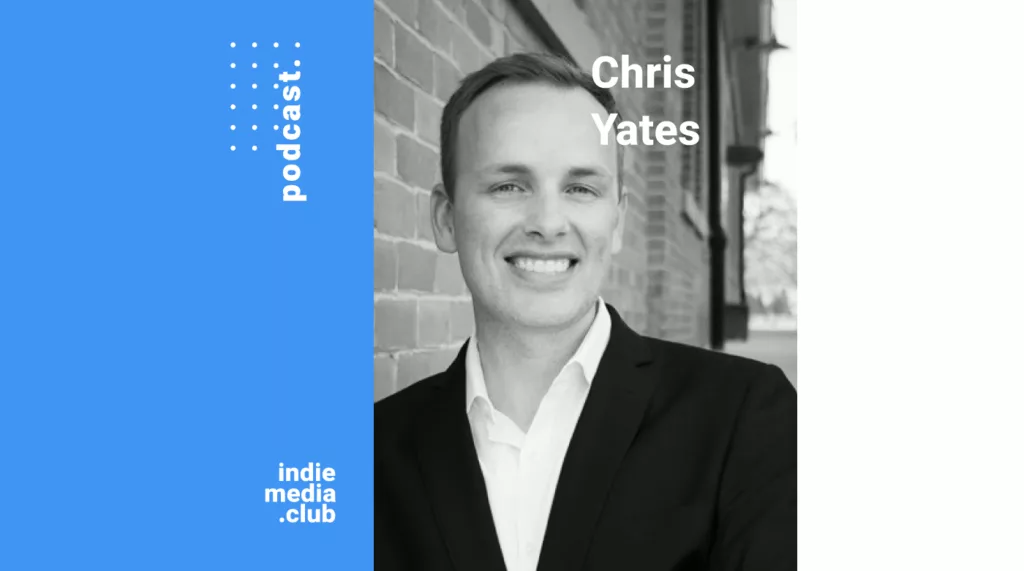
Ben Aston is joined by Chris Yates, Founder of Rhodium Weekend. He's also a partner of Centurica and an advisor in hundreds of millions of deals in online businesses, acquisitions, and exits. Listen to learn how to create value and sell your content sites.
Interview Highlights:
- Chris Yates is the founder of Rhodium Weekend and a partner with Centurica. He has successfully started, grown, and exited several online businesses. And he's advised on hundreds of millions of deals for online businesses, acquisitions, and exits. So he's got an interesting ability to spot undervalued assets, make improvements in them, and turn them into top performers. [0:03]
- Chris went into computer science, not actually knowing what it was. He got a scholarship and they required him to pick a major, so he picked computer science. [1:09]
- Chris ended up taking a bunch of business courses as part of his computer science degree. There were a couple of guys in his dorm that had started a business. It was called NiftyTricks Media, and it recorded semi-professional athletes doing skateboarding tricks, snowboarding tricks, and kayaking tricks. [1:32]
- The guys from NiftyTricks Media were looking for somebody to help with the backend of the website in terms of coding. And so they invited Chris to join on as a partner in that business. And that was his first real foray into being an entrepreneurial type of person. [1:59]
- Rhodium is Chris' passion business. He connects great people together and builds a community around this idea of acquiring and growing online businesses. That is a big part of his focus. [3:14]
- At Centurica, Chris is more focused on the sales, marketing, and IT side of the business and his business partner, Brian, runs the day-to-day operations. Chris acquired that company in 2015. [3:41]
- Right now, Rhodium and Centurica take 95% of Chris' time. And then outside of that, he does a little bit of advising and investing as well. [4:02]
- Centurica helps people acquire online businesses by doing the due diligence work. Due diligence means evaluating the risks and verifying the claims the seller is making about the business. [4:19]
- Centurica is primarily focused on companies who are doing multiple acquisitions. So these are typically companies that are funded somewhere in the eight to nine figure range. [5:05]
- The original founder of Centurica attended some Rhodium events and Rhodium is known for being a great event for buying and selling online businesses. [5:42]
- One of Chris' biggest screw ups is his first six-figure deal that he put money in to acquire, and he ended up buying it right before a major Google algorithm update. And their site dropped in terms of traffic from 70 to 80% overnight. [7:28]
- Discretionary earnings, in content businesses, is usually 80% of your gross revenue. Discretionary earnings is basically the amount of profit in that business. [10:24]
- Most financial buyers are buying a business because of the return that it can generate from the profits that the business is making. The first thing that you have to understand is most valuation is driven by the trailing profits of the business. And by profits, the number or the name of the term in the industry that Chris' uses is called "Seller's Discretionary Earnings". So that's basically the profits of your business. [17:48]
The best thing you can do to drive value is to increase your profits.
Chris Yates
- The marketplace that has the highest volume of deals for content type businesses is Empire Flippers. [22:38]
- Another factor in terms of valuation is who your buyer is. Most of the buyers that Chris works with would fall under the financial buyer bucket. That means that they're looking at the profits of the business. [24:14]
Private equity means that they just go raise money from wealthy individuals or from retirement accounts, and they apply that money to buying businesses.
Chris Yates
- Content production is usually the biggest expense of any content business. And we know that profit is the biggest driver of valuation. [29:52]
- When choosing a broker, you have to look at their track record and have them do evaluation. Go to a few different brokers that you're considering. Ask them to value your business and you'll have to provide them some information and have them give you a real assessment and understand what it is that they put as the value of your business. [30:53]
Don't get so focused on the purchase price. The most important thing to think about is how much money you are getting upfront on a deal.
Chris Yates
- The main area where Centurica's work will affect the original agreement, which is the Letter of Intent or LOI. That lays out the terms of the deal with the buyer and seller agreeing before due diligence starts. [35:10]
- The best advice Chris has ever received is...
You're the average of the people you surround yourself with.
Chris Yates
- Chris' advice for someone at the start of their digital media journey is find somebody who's already walked the path that you want to walk down. [43:24]
The fastest way to move quickly in terms of leveling up your skills and getting experience is by shadowing somebody who's already doing it.
Chris Yates
Guest Bio:
Chris Yates is an entrepreneur who acquires and manages portfolios of websites. He is the founder of Rhodium Weekend—an event for investing in online businesses, and he runs several online businesses including Centurica and Vision Group Management.
Chris started his online entrepreneurial journey in 2009 while running a digital marketing agency. He felt client work wasn’t scalable, and he had an urge to build his own assets. He also got a call from a former partner/mentor who wanted to partner with Chris on buying online businesses. They bought 10 or 12 websites that year, and Chris thought it was so much fun that he sold his marketing agency and started acquiring web businesses full time.
What I believe drives a lot of value in these content businesses is the quality of the content and how well positioned it is in terms of its ability to drive ranking in the search engines.
Chris Yates
Resources from this episode:
- Apply to join the Indie Media Club
- Check out Rhodium Weekend
- Check out Centurica
- Check out Chris' blog chrisyates.org
- Connect with Chris on LinkedIn
- Follow Chris on Twitter
Related articles and podcasts:
- Intro Episode: Welcome to the Indie Media Club
- Podcast: How To Build A Community Strategy That Attracts, Engages And Retains Your Tribe (with Noele Flowers from Teachable)
- Podcast: How To Effectively Repurpose Content To Increase Value (with Sean McCabe from Seanwes)
- Podcast: How To Profitably Build & Scale 50 Content-Based Websites (with Ewen Finser from Venture 4th Media)
- About the Indie Media Club podcast
Read The Transcript:
We’re trying out transcribing our podcasts using a software program. Please forgive any typos as the bot isn’t correct 100% of the time.
Ben Aston
So today I’m joined by Chris Yates. He is the founder of Rhodium Weekend and partner of Centurica. He successfully started, he’s grown, and exited several online businesses. And now he’s an advisor in hundreds of millions of deals in online businesses, acquisitions, and exits. So he’s got this interesting ability to spot undervalued assets, make improvements in them, and turn them into top performance.
So if you’re interested in creating value, sustaining value in your online content business, then you should listen to this podcast. We’re going to be talking today about how to value and also sell your content sites. So keep listening.
Hey Chris, thanks so much for joining us today.
Chris Yates
My pleasure. I’m honored to be on and, uh, excited to chat.
Ben Aston
Awesome.
So I’m interested in going right back to the beginning. You did computer science at university, and then you got into this world of online business entrepreneurship. Can you tell us how that happened? How did you decide to, or how did really your journey begin in online business and entrepreneurship?
Chris Yates
Yeah. So, uh, I went into computer science, not actually knowing what it was. I, uh, I got a scholarship and they required me to pick a, uh, a major. So I picked computer science and, um, so anyway, I, you know, and once I started, I’m like, I might as well finish it. Um, within that department though, they gave you two tracks.
You could be more of like the engineer or you could, you could actually have an emphasis in business. And so I ended up taking a bunch of business courses and things like that as part of, uh, that computer science degree. And, um, there were a couple of guys in my dorm that were, had started a, um, a business, uh, basically it was called NiftyTricks Media, and it recorded like semi-professional athletes doing skateboarding tricks, and snowboarding tricks, and kayaking tricks, and stuff like that.
And so they’d built this business kind of in .com boom era. And they were looking for somebody to kind of help with the backend of the website in terms of coding and those types of things. And, um, so they invited me to join on as a, as a partner kind of sweat equity partner in that business. And that was my first real foray into, uh, into being a, I guess an entrepreneurial type person. And it was around that same time I was reading books like “Rich Dad Poor Dad”, and “The E Myth” and, and some things like that.
So kind of, that was like a perfect storm for me too, to get that bug of, uh, wanting to do my own sort of business. And, and it got me into the online world as well.
Ben Aston
Cool. And tell us, what is your focus right now? When I, when I read your LinkedIn earlier, when I was just prepping, man, there’s a lot of things that, that are on there that you are still involved in.
Um, so yeah. What is your focus right now? I know you’re a partner in Centurica, I know you were involved in Rhodium Weekend, but yeah. Tell us what is your real focus?
Chris Yates
Yeah, so Rhodium is depending on the time of the year, is, uh, tends to be the focus let’s say within that 60-day window before an in-person event happens, um, because it just requires so much focus.
So Rhodium is really, you know, kind of my passion, uh, business, if you will. And it’s really cool to get paid to do something I would do for free, which is connected to great people together and kind of just, you know, build a community around, um, this idea of acquiring and growing online businesses. So that is a big part of my focus.
And to me, that’s kind of a platform that has led to a lot of other opportunities. Um, and one of those opportunities was to acquire the company Centurica, which is, uh, I’m more focused more on the sales marketing, um, IT side of that business and my business partner, Brian runs the day-to-day operations. So I acquired that company in 2015, brought by Brian on who became a partner in the business.
And, um, we’ve been growing like crazy within that business. So that’s required a lot of my time as well. So really right now, Rhodium and Centurica are really probably like 95% of my time. And then outside of that, I do a little bit of advising and investing as well.
Ben Aston
Cool. So tell us a bit about Centurica. What does Centurica do and what led you to want to acquire it in the first place?
Chris Yates
Yeah, so Centurica helps people acquire online businesses by doing the due diligence work. So what does due diligence mean? Essentially, it’s evaluating the risks and verifying the claims the seller is making about that business, and the simplest analogy I can, I can describe for those who might not be familiar with this concept of due diligence is like, you know, if you buy a house, you always hire a property inspector to look for leaky pipes and all the things, right?
So that’s kind of what we do for businesses. So we’ll look over the finances to say, okay, is this business actually earning what they say it’s earning? And Hey, how, how sustainable is this traffic? Is there major issues with it?
Those types of things, you know? And it goes obviously much deeper than all that, but from a high level, it’s assessing risk as well as looking a little bit at the opportunity. And so right now, as of today, Centurica primarily is focused on, um, companies who are doing multiple acquisitions. So these are typically companies that are funded, uh, usually like, you know, somewhere in the eight to nine-figure range of funding to go acquire companies.
And we kind of step in as a third party to look at those, help them understand what are the risks of them investing in this deal. Um, so hopefully that gives you kind of like at least a high-level overview. You asked how I came to own it? So, um, one of the benefits of running a community like Rhodium is you kind of get your name out there and you get to meet a lot of interesting people.
The original founder of Centurica was a, uh, attended some of our Rhodium events and, uh, Rhodium is kind of known for being, you know, a great event for buying and selling of online businesses and things like that. So obviously a service business that helps people with the buying makes it made sense that it would be, you know, something in kind of my world.
And so the owner of that business approached me and said, Hey, there’s two people in the world that sell this too. You’re one of them. You want to do a deal? And so we did. So that’s how I came to kind of actually, you know, make the decision that yes, this makes sense to, to acquire, uh, it fits within kind of my ethos within the community.
It could provide value to two members in Rhodium. So there was a good kind of strategic fit there.
Ben Aston
Cool. And I’m, I’m interested in, in terms of your kind of experience in preparation for Centurica. Um, obviously in due diligence, you’re trying to identify, um, you’re trying to isolate risks. Um, you’re trying to, uh, value those risks as well, upside and downside, I guess, um, those positive and negative risks, but I’m curious from your experience of all, all the online businesses that you’ve been involved in.
Um, that have given you, I guess, this preparation and this experience to enable you to risk things. Well, what has been your biggest screw-up that you learned from that, that the every time you value a business, you go back to and think, oh man, I want to check out this gotcha because uh, this got me once.
Chris Yates
Yeah. So. Well, okay. So there’s, there’s my story of the mistake I made. And then there’s kind of like how that gets applied today in my thinking and recommendations to clients and things like that. But in short, uh, my first six-figure deal that I, uh, put money into to acquire, ended up buying it right before a major Google algorithm update.
And our site dropped in terms of traffic about 70 to 80% overnight. Uh, and if for those who’ve been around long enough, if they’ve heard of the Penguin Update, we bought a site right before that update. And so, um, you know, it was, it was a, it was a wake-up call and a moment where I realized, you know, that, um, basically being good at SEO is not really a business model.
Like it, it is, it is, uh, you know, it’s a great way to earn money, but like, if you’re gonna invest real money into something, you know it, and at the end of the day, if, if that traffic were to go away, like, what do you have left? Really all you have is, is, um, you know, kind of some content sitting on a website that’s not performing and doing anything for you.
So the mindset I shifted to was stop, stop thinking about this as sort of money-making opportunities or, um, you know, kind of marketing channels are not businesses, right? You still need to have something that actually functions like a real business and those kinds of things. And that can be applied today in a lot of ways, whether somebody’s buying an Amazon business or somebody’s buying a content site or software as a service business, You know, thinking about things, not as kind of money-making hacks, but as real businesses, um, fundamentally has, has been a mindset shift that I learned from that particular mistake.
Ben Aston
Cool. So, yeah, let’s, let’s dig into this a bit. So when you are assessing the health of media business and let’s talk about a content-based website. Um, what do you, I mean, what’s most important to you in assessing that value? What you’re talking about is, is not just about, it’s not just about the content that’s ranking, but for a content site then how do you assess that?
How do you assess that value?
Chris Yates
Yeah. So first I just, just to make sure that I’m understanding, um, you know, what direction you want to go with this question. So when I think about kind of content media businesses, there’s, there’s the sites that sort of generate content, um, published content to generate free traffic, right?
And then they monetize through affiliate or advertising. Then you have content businesses that actually produce, let’s say a membership or a digital product or something like that. So let’s just start with what I consider to be one of the more risky types of content businesses, which is something that you’re just publishing content to rank on the search engines and you’re monetizing through advertising and those types of things.
So if you kind of boil it down to first principles, what you have here is, um, is a, is, is something that relies on new traffic coming in because your whole purpose with the site is to get them off of your site as quickly as possible by clicking on your ads or clicking on your affiliate links or whatever. Right?
So if, um, if that’s the principle that you’re, you’re trying to accomplish, you are so, everything really boils down the lead domino in the business is driven by the ability to go get free traffic. So then you start to ask yourself, okay, well, what drives the ability to get free traffic on a business like this?
And before I go there, let me just mention, revenue, uh, is the biggest factor or not revenue, sorry, discretionary earnings, which we’ll talk about. In content businesses, usually, that’s like 80% of your gross revenue would be your discretionary earnings, something like that. Um, and. Discretionary earnings is basically the amount of profit in that business.
Um, and then you also will add certain expenses back. Content being one of them, which something we can dive into later if you want. But that revenue is really driven by the traffic because this business model relies on your ability to go get new visitors to your website, get them clicking ads and viewing ads, and things like that.
So, so then you ask yourself, okay, what is this traffic driven by? So for a content business, um, where we’re trying to rank in search engines, typically the traffic is driven by your rankings in the search engines, right? So then you have to ask yourself again, well, what drives the ranking in the search engines?
And there’s all sorts of factors. Google will tell you some, some they won’t, et cetera, but at the end of the day, what they will tell you consistently is you got to create a great user experience. You got to create great content on your site. So if your ranking is really driven by the quality of your content, that’s really one of the key areas from a due diligence perspective that I would really want to understand.
So how are they producing that content? Is that content of high quality or are they hiring, you know, some somebody offshore who’s not a native English speaker to do this for really, really cheap. Um, you know, that’s obviously going to be more risky than a subject matter expert who also owns that owns or understands SEO and they’re writing content around that. So the bottom line, what I believe drives a lot of value in these content businesses is the quality of that content. Um, and how well positioned it is in terms of its ability to, to drive ranking in the search engines and those types of things.
Ben Aston
And so obviously what you’re talking about, or what you mentioned previously was, uh, the diversification of those revenue streams, so that it’s not just dependent on content and advertising and affiliate links.
But then I think that you’ve mentioned membership. Um, but how else do you see the, I guess the most effective ways of diversifying an advertising affiliate-based content site to a more diversified business model? Um, where have you seen that kind of work most effectively?
Chris Yates
Yeah. So, uh, so at the bottom end of the day, there’s two ways to think about this.
This is number one. What do you need to sleep at night? I mean, ultimately this is the business that you’re running and many people are willing to accept the risk of, um, you know, Google algorithm updates and things like that. So if you’re the type of person who is comfortable with that risk and you’re willing to do it, I don’t necessarily think you need to diversify.
And in fact, you can still sell these businesses just fine, even if they are pure 90 plus percent Google SEO traffic, right? However, for those of us that want to diversify and want to be able to sleep better at night because we worry or we’ve been through these algorithm updates, then the question becomes a little bit different, right?
And you have to think about, um, where, where can diversification happened? So the simplest place would be, you can diversify into more sites, and two additional niches, right? Um, and that would generally involve probably wouldn’t always want to do that unless it’s really closely related to the topic that you’re already, you know, riding around on a particular site.
I’d rather see somebody starting a new site in a new topic. Um, and you know, going after that sort of diversification, so you could do more sites, right? You’re still relying on Google SEO, but you’re in different niches. And, um, you may have a little bit more control over how you launch these new sites with new lessons learned and, and mistakes you may have made in the past as far as black hat tactics and things like that to kind of help reduce some of that risk, right?
So that’s one way. Uh, additionally would be to find new traffic sources. So for instance, if you are, uh, in a, an industry that is image-heavy, like you, you visually, there’s a lot of things you can do. You might look at Pinterest as a good channel to drive additional free traffic. So let’s say that you had 60% of your traffic coming from Google SEO, 40% from Pinterest.
Now you can sleep a little bit better at night because those two are not necessarily directly correlated to one another, right? Um, so finding additional traffic channels would be sort of the next piece. When you start to get into like, you know, more advanced strategies, now we start to talk about, okay, how do we take a first-time visitor to your website and turn them into a repeat visitor on your website?
And there are different ways to do that, but, you know, the simplest would be to start to build some kind of an email, uh, opt-in component and create something on your website that gets people wanting to come back to your website. So it kind of depends on your industry. And you know, if you’re in an industry that is maybe very news-oriented, it’s pretty straightforward.
You just, you know, you produce good news and get them coming back to the site. If you’re in an evergreen space, it’s a little more challenging, right? So if you have a history website, you know, you’re, you’re kind of opportunistic on those people and you have to get creative. So, you know, we could, we could dive into like some different industries and stuff, but the first thing would be, you know, start with an email list, start to develop a regular cadence of getting them to engage, et cetera.
Um, so that would be like the, you know, to me, the lowest hanging fruit and to monetize that, the simplest way would be you just get those people back to more of your content so that you can get more views on your advertising and things like that, right? So that can be like a first step. It doesn’t, it doesn’t mean you have to build like the world’s most amazing newsletter or, you know, some special membership or community or something like that, but just getting people to go from, or your average, um, you know, visits per user, instead of that being one, get it to 1.5 or 1.1 or 1.2.
Now you’ve created some stability. If you lose all those visitors, now you at least have an email list to work from and maybe launch products or whatever, you know, opportunities can come from that.
Ben Aston
And so as you begin to, um, diversify your traffic streams, um, also maybe diversify your revenue streams, how does that impact the valuation that you as an independent assessor would, um, you know, give them multiple four? So can you give us some numbers in terms of how, when you’re evaluating the risk or you’re evaluating, or just valuing the business at all, what do you, what are the major kind of factors for that?
Chris Yates
Yeah, so, well, let’s, let’s first just talk about what is it that really drives valuation. Um, just so that we have that cause what I, what I’ll talk about in terms of diversification is really small relative to, um, the earnings of the business. So most financial buyers are buying a business because of the, um, the return that it can generate from them, from the profits that the business is making.
So first thing you have to understand is, is most valuation is driven by the trailing, let’s say 6 to 12 months of, uh, profits of the business. And by profits, the number or the name of the, the term in the industry that we use is called “Seller’s Discretionary Earnings”. So that’s basically the profits of your business.
And then you add back one time expenses. So an example of a one-time expense might be that you published a whole new section of your website that’s evergreen content. Yes, you may still need to update it, but maybe you put 10 grand into producing all this new content. Commonly some portion of that $10,000 will not be considered an expense in that business.
And so that’s what’s called an “add back”. So let’s say that you had a hundred thousand dollars in profit. Um, you know, and of that a hundred thousand, 10,000 was sort of a one-time project that you did. Um, we might now say, okay, now your business we’ll add that 10,000 back. Now, your business is earning $110,000 a year in that business.
And then what you do is you take that trailing 12 months or trailing 6 months or whatever, and you apply a multiple to that. And a multiple could be a monthly multiple, meaning it might be like, let’s say 36 months worth of the profits. Uh, or it might be an annual multiple, just depending on which brokerage and, and things like that.
So starting with that, as the understanding that the best thing you can do to drive value is to increase your profits. Um, when we start talking about diversification, if it is something that will actually require you to have a big infrastructure in terms of staff. And we’ll add a bunch of expenses to the business relative to, um, the revenue that it generates, that actually can have a decreasing effect in your overall value of the business.
But let’s assume that, you know, you could, you could find a new marketing channel that’s comparable in terms of costs and things like that. Um, that will let let’s say it might bump up your, let’s say you split, uh, your, your, your split went from 95% revenue generated from Google. Now you get it down to, let’s say 70% Google, you know, uh, 25% Pinterest or something like that.
That’s the driver. That’s probably gonna give you another 0.25 to 0.75 times your annual earnings in that business in terms of, uh, a bump in the valuation or your exit price. So it can be helpful. Um, you know, just depending on obviously who the buyer is and, and things like that. But diversification is generally positive to your, uh, to your valuation, to your multiple, but you have to temper that with how much does it cost you to create this Pinterest channel and maintain it, et cetera.
Ben Aston
Sure. Um, what else should people who are trying to create value through their content site, what else should they be considering or thinking about in terms of driving those higher multiples in the valuations? Obviously, so profit is first and foremost the most important factor there, but what else should people be considering?
Chris Yates
Yeah. Uh, so diversity within your, um, uh, your rankings. So if there’s a single keyword that drives 80% of your traffic, that’s going to get a much lower multiple than something that maybe there’s only, you know, or one page on your website is driving 80% of your traffic might be for multiple keywords.
So that diversity of pages and, and keywords within one of your channels is actually a really key as well. Then the trend of the business is also important. So if you’re selling a business that is now declining over the last six months, you know, people are going to say, okay, well, what if that trend continues?
And your valuation is going to go down as a result of that. So trend is very very critical. Uh, if your business is growing, generally, that’s going to bump your multiple up because the owner is going to say, okay, well, if all I did was buy this, it should continue to grow, et cetera. So you want to, you want to probably sell, the ideal time to sell would be a business that’s stable and growing, but not growing like an insane rate.
That’s really hard to predict what’s going to happen, right? And you definitely don’t want to sell if your goal is to maximize your valuation when, when you’re on a declining trend. So those are a couple of key factors there.
Ben Aston
And in terms of those multiples that you are seeing for content-based sites at the moment, let’s say with there are purely based on advertising affiliate revenue, what are the multiples that you’re seeing and how is that changing and evolving?
Chris Yates
Yeah. So the multiples I’m seeing right now, so first off, let’s just talk about where are these businesses being sold? So I would say the, the marketplace that has the most volume of deals that are content type businesses would be Empire Flippers, commonly. Um, and we don’t see a lot of online businesses that are content businesses that are generating more than like a half a million dollars a year in profit much on the marketplaces.
So most of what we’re seeing is kind of sub that number. Once you start going above like 500K things really change, especially once you get over a million dollars in profit, things will really start to change in terms of multiples. So, so what I’m about to say is really, so for businesses that are doing like low six figures, You know, mid to high five figures, something like that per year in profit.
Um, generally we’re seeing that those asking prices anywhere from like three to four times the annual earnings of the business. Empire Flippers over the last year or so again, they’re, they’re one of the kind of market makers in terms of, um, what they’re listing things out and stuff like that. They’ve been slowly ratcheting that number up, you know, it might’ve been like a 2.75 a few years ago.
Now commonly it’s a three and a half, 3.75, stuff like that. So the, um, just by owning these businesses and waiting over the last year, the value of what you have has grown because, you know, people are willing to pay more and more, uh, you know, for these businesses and the asking prices have been going up and stuff like that.
Ben Aston
And so what about at that top end of the market then where for the content businesses making more than a million in profit? How does the buyer profile and market adjust at that higher end?
Chris Yates
Yeah. So the, so the buyer, this is another factor in terms of valuation is who your buyer is. So most of the buyers that we work with would fall under the financial buyer bucket. And so that means that they’re looking at the profits of the business. And I do want to say that there is a whole another bucket of buyers that are strategic. So this would be like Google or some big media company buying somebody. Really for the eyeballs and nothing to do with how much your business is earning or for your list or something like that.
So I don’t so much specialize in that area, but just know that those, those deals do happen. And the valuations on those are not always driven by, by profits of the business. So when we start to get to a, a media company that’s doing, let’s say a million a year in EBITDA or profits in that business, that is commonly going to be acquired by a larger media company or potentially a private equity company and private equity means that they just go raise money from, you know, wealthy, um, individuals or from retirement accounts or something like that, and they apply that money to buying, buying businesses.
And so it’s just a different type of buyer. They are commonly, you know, paying, let’s say four to eight times earnings on a business like that with all sorts of weird business structures and terms associated with it. So you might, once you get to up to a million, you might expect your multiple to bump up by at least a couple annual, you know, numbers.
So it might go up from like a four to a six or something like that. If you get the right buyer as an example.
Ben Aston
And so how would you see, I mean, you talked about how Empire Flippers kind of driven the market over the past few years and you’ve seen those valuations increase. Well, what else have you seen evolving and changing in the content-based website space over the past few years?
Chris Yates
Yeah. So it seems like there are, um, Uh, you know, the broad, the broad, the macro view is that it, it seemed like there was a trend for the really big players, like the New York Times and some of those types of companies who covered every topic and they covered every topic really well to kind of dominate search.
And now it seems like those larger media brand brands are kind of having their niching down a little bit more and more. They’re like a conglomerate of a bunch of smaller authority sites and small for them is still pretty broad in my opinion. I mean, it’s like New York Times going from New York Times to Wirecutter, right?
Wirecutter is very, very broad. Um, but you know, I, I would say that’s something that I’ve seen just in terms of general trends. Um, I’m also seeing that more like tactical what’s happening really at the smaller end of the market, kind of where I commonly play relative to the really, really big players, like the Dotdashes and stuff like that would be, um, we’re seeing more Amazon aggregators actually, who, who go out there and buy Amazon businesses.
They’re realizing how important the the media, um, publishers are to driving business to their listings and they’re starting to actually get into the content game and doing more and more acquisitions of content sites. So that trend is going to, in my opinion, gonna drive valuations probably higher for companies that are in the industries that these aggregators are also selling their products within that they have brands in.
So if you happen to have a business that is, you know, in a particular brand than an aggregator has a brand, they own it, et cetera. They may be kind of contacting you and coming after you to acquire you. So, I think that the liquidity in this market has gone up as a result of the amount of money from investors and the amount of money that, that has been available in terms of debt to these companies that are kind of rolling up businesses and trying to grow really, really quickly.
Ben Aston
And so for someone who is interested in selling then, they’ve probably heard of Empire Flippers, Latona’s, I think of as the, the two, um, too big out there. How do you think for someone who’s thinking about selling, how do you think they should prepare themselves and their site for an exit, um, and maximize their valuation, but ultimately the sale price?
Chris Yates
Yeah. So the first thing, when you talk to either of those brokers or anybody that might represent you for a content business specifically, I think the first thing to understand is are you in a, or how can we, how much can we add back of the content production we’re doing? So for example, let’s say that you’re a news site and your content lives about seven days before it becomes a relevant, you’re gonna, you’re not gonna be able to add any of that back probably, right?
Um, whereas if you’re in a history, Uh, if you’re in, if you’re writing about history of World War I or something like that as an example, uh, that that information is probably not going to change too much. Maybe it needs to be updated and refresh occasionally, but you might be able to add most of your, your content back.
Um, so first understanding how the broker is gonna represent you. Every buyer is going to look at that, add back a little bit different, but finding out what is your broker going to, you know, advise you there? Because if, if they’re gonna add most of that content expenses back, you can kind of keep doing things the way you were doing it already, uh, in many cases.
But if they’re saying, look, we’re not going to be able to add back any of your new content production. One of the things you may look at doing is starting to scale back new content production. And, um, in order to drive your profits higher and you probably would want to do this over a, let’s say a six month window prior to selling.
And the reason I say that just generally is because content is usually the biggest expense, content production is usually the biggest expense of any content business. And we know that EBITDA is the biggest driver of, or profits is the biggest driver of valuation. So we want to continue to increase our profits as much as possible.
So, and, you know, given that content is expensive, um, you need to understand like, can do I have to plan, uh, to drive that profit number higher by slowing down my content production or will that get it ended up, ended up getting added back anyway. And so I can kind of keep doing things the way I’m doing it now.
So that’s the first tip that may be not obvious and it will depend on who’s going to represent you at exit.
Ben Aston
And so, I mean, let’s talk about representing. So obviously there are brokers out there who want to sell your site because they kind of take a cut. Um, how do you choose a broker? Who’s the best broker to be using out there?
Chris Yates
Yeah. Um, I prefer not to answer that, but, uh, you know, in terms of who’s the best, but, um, what I would say is to look at their track record and, um, and have them do evaluation, like go to a few different brokers that you’re considering. Ask them to value your business and you’ll have to provide them some information and have them give you a real assessment and kind of understand, you know, what is it that they put as the value of your business?
And you can kind of compare a few. Well, you want to be careful of is somebody who is like being very, very aggressive with the valuation, meaning that it’s like way above market just to earn your business. And then, uh, compare that to somebody else who might say, well, we think this will sell them 30 days at this price or something like that.
Um, and here’s the five other deals that we’ve done recently. That kind of backup are, are, um, you know, kind of our data on that particular one. You know, those are two very, very different conversations. So don’t get lured in by somebody just promising you they can get you a big exit because what will end up happening more than likely is you might get that, but probably they will come back in three months saying, hey, we’re not getting interests. We need to drop your, your asking price down.
So I would say that’s the first step is just to go ahead and open the books a little bit to a few brokers and let them value your company and see kind of how they’re presenting that valuation, what you should expect, et cetera, looking at their track record, those types of things.
Ben Aston
So obviously you’re typically on the purchase side doing the due diligence for someone acquiring, what do you see being the deltas between that valuation price and the sale price that people end up paying? Um, and yeah, talk us through that due diligence process and how that impacts the negotiations.
Chris Yates
Yeah, so, okay. So your first question was, what’s the difference between asking price and actual final sale price? So the first thing that I want the audience to understand is price is not always the, the, the best driving driver. And let me give you an example. So, Ben, um, if you’re comfortable sharing, uh, what’s a site you’ve owned in the past, how much was it earning per year, roughly?
Ben Aston
Uh, let’s say the Digital Project Manager back in 2018, $700,000.
Chris Yates
Okay. So it was making $700,000. If I were to offer you a purchase price on that $700,000, um, of, uh, $7 million, would you take it?
Ben Aston
Back in 2018, I wish yeah.
Chris Yates
Okay. So, so $7 million you would take it. So that’s a 10 X multiple, right? But what you neglected to ask me is what are the terms? Right?
So the terms are, I’ll pay you a penny of debt, a penny a day until I pay for 7 million days or whatever it ends up being, right? So obviously terms matter. So, don’t get so focused on purchase price. The most important thing in my opinion to think about is how much money are you getting upfront on a deal.
Um, so some of these deals will have a big what’s called earnout component, which means that, um, your actual purchase price won’t be determined for a couple of years based on the performance of the business, right? Uh, there may be, you may be required as a seller to carry a note on a portion of the purchase price.
So just be aware that like price is not always the real story. Um, but that said, um, we are currently in a very much a sellers market. Most deals are going at or above asking price if they’re decent businesses, good businesses. So we’re actually seeing, you know, if there’s a business that’s listed at $500,000, it’ll go for 500 or it might go for more than that.
Ben Aston
Nice. And so in terms of the, that process of due diligence and how that then impacts the, does it impact the offer or does it tend to impact the terms that, that people negotiate? I’m just curious, where does Centurica come in in terms of saying, Hey, we’ve identified this kind of risk area. Um, therefore, this is what we think is a good purchase price. These are the terms that we think you should be thinking about. Is that, is that kind of how it works?
Chris Yates
Um, so the main area where Centurica’s work will affect, um, the original agreement, which we call a letter of intent typically, or an LOI in short. Um, that lays out the terms of the deal with the buyer and seller agreeing to before due diligence starts.
So let’s say you and I agreed on that deal to do a deal at 10 million. And you presented that to me as if the business was making $700,000 a year. I hire Centurica to come in and check, does this business really earn $700,000 a year? And if we were to find out, oh, you didn’t disclose that you have these five employees that are working, uh, on five of your other businesses, but half of their time is going towards this business.
And it wasn’t in the financials you, uh, projected. And we actually see that you’re really, if you take into account their time, it’s businesses only earning 500,000. Generally what happens in that case, did you say well, okay. We originally, well, either the buyer will now no longer trust you and won’t want to do the deal, or, um, typically what would happen is they’ll take, okay.
Well, we agreed at a 10 X multiple, so we’ll adjust this from 7 million down to 5 million based on the new, uh, $500,000 price. So that would be an example where it’s very straightforward. It’s like, okay, well, they might’ve just made a mistake and miss something and we discovered it. And then the price just gets adjusted. Where it’s more complicated is where a seller uh, represents that the business has had.
Let’s say, let’s, let’s talk about Google SEO. Let’s say that the seller or the buyer asked them early on and in the prospectus that they look at, it said this business has no manual penalties with Google at all. Ever. When we do our due diligence work, we discover, oh, wow. It looks like they’ve had five different manual penalties historically.
Uh, and we’ve seen this happen to the, you know, this up and down process happening with the traffic as a result of that. Now there’s a disconnect between what the business, how the business was represented versus what reality is. And that’s where, you know, we don’t really recommend how to move forward other than just letting the client know, Hey, here’s this risk.
It doesn’t match up with what, what we were originally expecting. Um, you know, here’s some ways you could go about addressing this, whether it’s an earnout or, you know, this, the buyer ultimately may want to walk away, but ultimately it’s up to the buyer to make the decision in terms of how they would move forward at that point.
Ben Aston
Awesome. Cool. Thanks for the insights on that. That’s super useful. I want to switch, switch back to you, and kind of what you’re up to. I’m interested for you in this role Centurica, but also Rhodium Weekend. Like what, what is tough? What are the kind of biggest challenges you encounter on a daily basis?
Chris Yates
Yeah, so, well, we can talk about Rhodium, cause this is probably pretty obvious. I have an in-person event. COVID has been a pain in my, you know, what, um, as a result of, of trying to get people together in person. So, you know, I’ve had to figure out how do we take, um, an in-person experience, you know, in a business model that’s built around that?
And how do we, how do we do something different, you know, in this, this environment. And so in 2019 or 2020, I was able to create essentially an online experience, which is different, but, um, you know, tried to accomplish the same goals at an in-person experience with it would take and think about it in creative ways and try some really unique ways of connecting with people remotely.
Um, so that’s been a challenge for me and will, I think, continue to be a challenge on that particular business in general. Um, in terms of Centurica, uh, you know, we’ve had more demand than we have capacity and in terms of people wanting to hire us to do work for them, and when you have a service business, you know, typically you’re, you have to hire more people to do that.
And, and people, um, people is a challenging problem, sometimes. And so, uh, you know, trying to navigate like, you know, do we, do we hire, do we not hire? And kind of, sometimes you’ve got a tiger by the tail in terms of growth. It can be very, very challenging, almost as challenging as having something that’s not quite, you know, growing as much as you’d like.
So, so that’s my other, my other challenge.
Ben Aston
Cool. Well, let’s close out with a lightning round. I’m curious. What is the best advice you think you’ve ever received?
Chris Yates
You’re the average of the people you surround yourself with.
Ben Aston
And tell me about your personal habits, you’ve had a ton of success, building businesses, starting businesses, X team business.
What do you think of the way that you work? Your personal habits has contributed most to that success?
Chris Yates
Yeah. So I would say probably the other day it boils down to relationships and people. I mean, if I look back at my career, generally, there were, uh, periods of time where there were big inflections in terms of, you know, what ultimately is a measuring stick, which is revenue and, and those types of things.
It generally became from a relationship that I developed, um, you know, around that time and had, had nurtured over a period of several years. So whether it was a mentor who I started a business together with, whether it was somebody who wanted to sell a business to me, whether it’s an idea I got for something I can do within Rhodium by talking to Rhodium members, a lot of it really boils down into having authentic relationships and, you know, kind of, um, I guess I would say sculpting who is in my inner circle and, and, you know, um, kind of nurturing those relationships over time consistently.
Ben Aston
Can you share a resource or a tool that you use regularly?
Chris Yates
Yeah. Um, so, I mean, this is just simple one for people who have remote workers, uh Hubstaff. Um, it, and I’m able to, um, have my employees track their time and we can pay everybody all at one time. Like, you know, I don’t have to even touch payroll anymore. My, my wife kind of handles all the payments and Hubstaff handles all the tracking.
So for those who are looking for something very tactical who have a few team members. Um, you are wanting to move off of just like an Upwork model. It basically gives you the same sort of platform.
Ben Aston
Um, what book would you recommend and why?
Chris Yates
Um, what stage would you say most of the people listening this are in?
Are they starting something? Are they thinking of starting something? Are they established?
Ben Aston
I’d say they’re, I’d say they’re established.
Chris Yates
They’re established. Okay. Um, yeah. So if there, uh, and what do you say is probably their most common challenges in their business?
Ben Aston
Um, scale?
Chris Yates
Scale. Okay. So I’d probably would recommend, uh, it’s a book call or actually I’d recommend getting the audiobook called, “Get a Grip”, um, and then reading the physical book, “Traction”.
So that is for those who are going from maybe solopreneurs to now building out a team and starting to have like leadership in the business. So I would say a book like that and understanding the EOS or Entrepreneurial Operating System, how to go from, you know, a small entrepreneurial team to one that has structure and, and, um, consistently rowing in the same direction. That one, you know, is, is consistently been raved by all of my community members who achieved that particular point of scale.
A bonus one for really anybody at any stage is a book called, “Influence by Robert Cialdini”. And it just really boils down to how to, how do you, um, how, how do you influence people and influencing is not manipulation. It’s just, you know, how do you present what you do in the best way possible? Whether that’s from a marketing perspective or how do you motivate your employees.
It really just boils down fundamentally how do humans think and how are they motivated and how are they, how do you get them to do the things that, you know, ultimately, uh, serve them and you together.
Ben Aston
And so for someone at the start on the other end of the spectrum for the start of their digital media journey, maybe they’re thinking about creating a content-based site.
What is one piece of advice you’d give them?
Chris Yates
For people just starting out, um, the, the main thing I would say is, um, you can go it alone and figure this stuff out from podcasts and stuff like that. But my opinion, the best thing you could do would be to do something like an internship. So find somebody who’s already walked the path that you want to walk down and, uh, work for free or work for, you know, pennies or whatever it is, or, or get a, uh, work for results that you generate and, you know, the fastest way to move quickly, in my opinion in terms of leveling up your skills and getting experience is by, um, you know, sort of shadowing somebody who’s already doing it, contributing to them in that process.
And, um, you know, that that’s like a lot of good things, likely what will end up happening from that is you’ll end up partnering with that person later for some engagement or some business that you want to start to do. So I would say skip all the podcasts and stuff, just go right to the source, somebody who’s in the trenches doing it.
Ben Aston
Awesome. Chris, where can people find out more about you and what you’re up to?
Chris Yates
Uh, gosh, uh, I’m most active on Facebook, I guess, in terms of what I’m doing, but, um, I would say the best place to find out would be rhodiumweekend.com and, uh, centurica.com.
Ben Aston
Awesome. Well, Chris, thank you so much for joining us today. It’s been great having you with us.
Chris Yates
Yeah, thanks for having me on.
Ben Aston
And if you like what you heard today, please subscribe and stay in touch on indiemedia.club, but until next time. Thanks so much for listening.